Power Station vs. Generator: The Carbon Monoxide Risk
This article contains affiliate links: if you buy through them, we earn a small commission at no extra cost to you. It never changes our verdict — our research method is public. See how we research
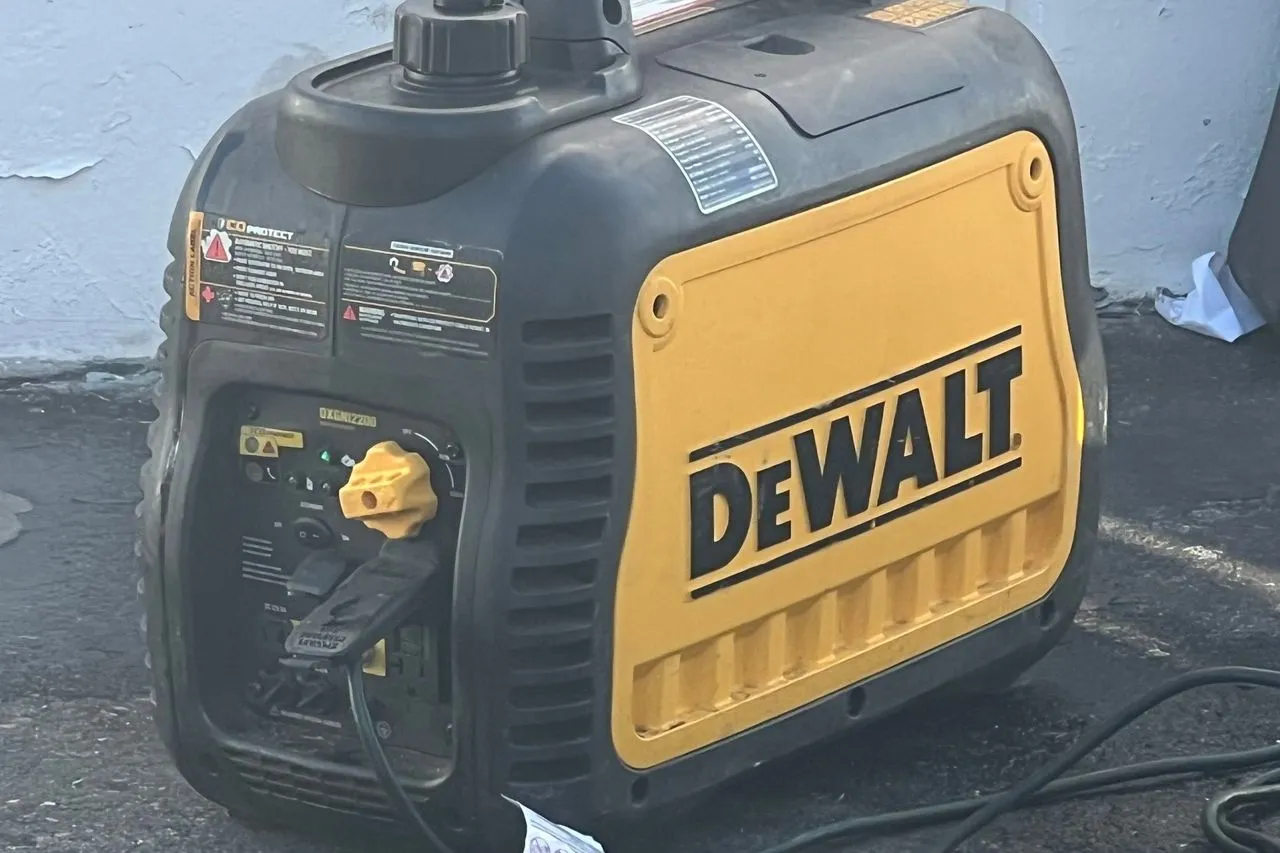
Here’s the part nobody puts on the sale page: a portable power station cannot poison you with carbon monoxide, and a generator can — even when you’ve done everything the manual told you to do. That single fact should carry more weight in this decision than watts, price, or runtime. A power station has no engine, burns no fuel, and produces no exhaust. A generator produces both power and a colorless, odorless gas that has killed people who followed the 20-foot rule to the letter, because the rule assumes open air that a covered porch, an attached garage, or an apartment balcony doesn’t actually have.
That doesn’t make generators the wrong choice. It makes this a question worth answering with real numbers instead of marketing copy from either side.
Why this decision matters most during a hurricane, not a blinking light
The baseline risk is already higher than most people assume. The CPSC’s own carbon monoxide data is blunt about the source: portable generators alone were associated with an estimated 765 non-fire CO poisoning deaths from 2009 on, roughly 40% of every consumer-product CO death in the agency’s jurisdiction, and about 100 a year in its most recent count. That’s an ordinary year, before a storm knocks out power to half a state and sends a few hundred thousand households hunting for their generator in the garage at the same time.
Storms are when the baseline turns into a spike, and the record is specific enough to name:
- Hurricane Laura, 2020 — 8 of the 15 confirmed storm-related deaths in Louisiana were attributed to carbon monoxide poisoning from portable generators, including five people in a single Lake Charles home who ran one in an attached garage with the interior door left partly open.
- Hurricane Ida, 2021 — the Louisiana Department of Health tied at least 6 deaths to generator carbon monoxide in the days after landfall, and a CPSC study published in June 2025 later documented generator exhaust infiltrating 105 southeast Louisiana homes from that same storm.
- Hurricane Sandy, 2012 — New York City’s Poison Control Center logged 437 carbon monoxide cases in the two weeks after the storm. Most of that spike traces to one apartment fire, and indoor grilling accounted for roughly 29% of cases — but improperly placed generators still made up about 17%, dozens of poisonings from one cause in fourteen days.
Read those together and a pattern shows up that has nothing to do with brand or model: people don’t get poisoned running a generator in an open field. They get poisoned running one in the one enclosed or half-enclosed space they had available — a garage, a breezeway, a covered porch — because that’s what was there when the lights went out.
The zero-CO fact that decides this for most households
A portable power station is a sealed battery with an inverter. There’s no combustion chamber, no fuel line, no exhaust port — nothing that produces carbon monoxide, ever, at any output level. That’s not a safety feature you can disable by misusing it; it’s a property of the machine. You can run one in a bedroom, a tent, or a closed apartment and the CO risk is exactly zero, every time, which is a sentence I cannot write about a generator under any circumstance.
The tradeoff is capacity, not safety. A 1kWh-class unit like the Jackery Explorer 1000 v2 (1,500W continuous, 3,000W surge) or the EcoFlow DELTA 3 (1,800W continuous, 3,600W surge) comfortably runs a refrigerator, a router, phones, a laptop, and a CPAP through the night — I ran the actual watt-hour math for a fridge specifically in how long a power station will run a refrigerator, and ranked the two head-to-head on the surge spec that actually fails in best power station for refrigerator backup. Neither one will start a well pump or run central air. That’s the honest boundary, and it’s exactly why the “which one do I even need” question can’t be answered by CO risk alone — but CO risk is where it should start.
Why the CPSC’s 20-foot rule fails on balconies, porches, and attached garages
The official guidance is specific: the CPSC and NFPA both say a generator belongs at least 20 feet from your home, outdoors only, with the exhaust pointed away from doors, windows, and vents. Opening a window or a garage door doesn’t count as ventilation — CPSC is explicit that opening doors or windows “will not provide enough ventilation to prevent the buildup of lethal levels of CO.”
The rule is sound physics. It breaks down against three real-world shapes hurricane survivors actually have:
- The covered porch or breezeway. It reads as “outside,” but a roof overhead traps exhaust the same way a partially enclosed room does. Published setbacks don’t settle it on their own, either: the June 2025 CPSC study of Hurricane Ida homes found exhaust working its way indoors from generators placed where the standard allowed, which is why its authors pushed for a bigger required distance than the voluntary one in force.
- The attached garage with the door cracked for airflow. This is the setup behind more storm-related CO deaths than any other single scenario, Hurricane Laura’s Lake Charles case among them. A cracked door doesn’t clear a garage; it slowly fills the house next to it.
- The apartment balcony. Most balconies simply aren’t 20 feet deep, so the distance requirement can’t be met at all — and CO drifting toward your own windows can just as easily drift into a neighbor’s. If you live in an apartment or condo, a fuel generator on the balcony isn’t a smaller risk; it’s a rule you cannot satisfy, full stop. My emergency preparedness checklist for apartments covers what to plan around that constraint instead of against it.
None of this means the 20-foot number is wrong. It means treat it as the minimum floor for genuinely open outdoor space — a driveway, a yard, a lot with nothing overhead — not a rule you can satisfy on a porch, in a carport, or from an apartment railing.
When a generator is still the right tool
I’d be selling you something if I said a power station replaces a generator across the board, so I won’t. A generator is still the better call when the load goes past what a 1-to-2kWh battery was ever built for: a well pump, central air conditioning, a sump pump during flooding, or keeping a full kitchen and medical equipment running for several days straight. Refueling a generator with gas cans beats waiting on sunlight to refill a battery when an outage stretches past 48 or 72 hours, and that’s a real, common outcome after a major hurricane.
If that’s your situation, a standby unit with an automatic transfer switch installed by a licensed electrician takes the nightly placement decision out of your hands: it starts itself outdoors, on a fixed pad, at whatever setback your code requires. Don’t read that as zero CO risk, though. The June 2025 CPSC study covered stationary units specifically, and its authors argued the voluntary five-foot setback many municipalities use is too small, floating 25 feet instead. Ask the installer what distance they’re working to, and put alarms inside regardless. A portable generator can also do the job; it just means you personally own the placement decision every single time you run it, in conditions (rain, dark, exhaustion) that make people cut corners on exactly the rule that keeps them alive. If your outage math tops out at a fridge, phones, a CPAP, and a router, a 1kWh-class power station — or a 2-to-3kWh unit paired with solar for anything longer — covers that without the CO question ever coming up.
If you do choose a generator, the non-negotiables
This is gear guidance, not a substitute for the manufacturer’s manual or your local fire department’s storm briefing — read both, and treat what follows as the floor, not the ceiling:
- Fully outdoors, fully in the open. Not a garage with the door up, not a covered porch, not under a carport roof. The CPSC’s 20 feet only works in genuinely open air.
- Exhaust pointed away from every structure — your house, a shed, a neighbor’s wall — not just the nearest door.
- Battery-backed CO alarms on every level of the home, and outside sleeping areas, per CPSC and NFPA guidance. Interconnected alarms, where one sounding triggers all of them, are the standard both agencies recommend.
- Look for the ANSI/PGMA G300 safety standard on the box. Generators built to it carry an automatic CO shutoff that cuts the engine before concentrations pass roughly 800 ppm indoors — a real engineering backstop, not a replacement for correct placement.
If any of that feels like more to manage than you want during a storm, that’s a legitimate reason to buy the battery instead. Preparedness is insurance, not fear, and the point of this whole comparison is picking the tool that matches the actual outage you’re planning for.
Who needs which one — and who should skip both
Get a power station if your outage plan covers a fridge, phones, a router, and maybe a CPAP or a medical device, and you want a tool with zero carbon monoxide risk you can run anywhere, including indoors or on a small apartment balcony where a fuel generator is a non-starter. It’s also the right call if you’ve read the generator placement rules above and know you wouldn’t reliably have 20 feet of open space to follow them.
Keep the generator if you’re covering a well pump, central air, or a full house for multiple days, and you’re prepared to place it correctly every time, with CO alarms installed and a real 20 feet of open air — not a porch, not a cracked garage door.
Skip the CO risk entirely if your outages are the occasional few-hours kind: a power station this size handles that with no exhaust to manage and no distance to measure. And if a listing for either product leans on hurricane-devastation photos to sell you rather than showing you the spec sheet, that’s marketing filling a gap the numbers should be filling instead — Plan for the Tuesday, not the apocalypse, and let the actual math above make the call.
Getting the generator or power station question right is only step one, too. Once the storm passes and the water recedes, the CO risk gives way to a different clock entirely — I ran the numbers on whether a power station can run a dehumidifier fast enough to beat flood mold for exactly that stretch.
Cover photo: “DeWalt Gas-Powered Portable Generator” by TaurusEmerald, via Wikimedia Commons, licensed under CC BY-SA 4.0.
Frequently asked questions
Is a portable power station safer than a generator for carbon monoxide?
Yes, categorically. A power station has no engine and burns no fuel, so it cannot produce carbon monoxide at all. A generator can, even placed outside, if it's near a door, window, or covered porch. For CO risk alone, the power station wins every time; the tradeoff is capacity, not safety.
Can I run a generator on my apartment balcony?
Generally, no. CPSC and NFPA both call for at least 20 feet of open-air clearance from doors, windows, and vents, and most balconies don't have that depth — the roof above also traps exhaust like a partially enclosed space. Check the lease too; many buildings ban generators outright.
How far does a generator really need to be from the house?
The CPSC's official minimum is 20 feet, exhaust pointed away from the home. Distance alone is no guarantee: a CPSC study released in June 2025 found exhaust from stationary generators still infiltrated 105 homes in southeast Louisiana after Hurricane Ida, and its authors called the current voluntary setback inadequate. Treat 20 feet as a floor.
Can a portable power station cause carbon monoxide poisoning?
No. A power station stores electricity in a battery and has no combustion process, so there's no exhaust and nothing to produce carbon monoxide. That's the entire safety case for running one indoors, in a tent, or on an enclosed porch — anywhere a generator would be illegal and dangerous.
What size power station replaces a small generator during a hurricane?
A 1,000Wh-class unit — the Jackery Explorer 1000 v2 or EcoFlow DELTA 3, for example — covers a fridge, phones, a router, and a CPAP for roughly 12 to 18 hours per charge. For a well pump, central air, or multi-day coverage, that is still generator or 2-to-3kWh-plus-solar territory.
Do carbon monoxide alarms react fast enough to catch a generator leak?
A CPSC/NFPA-compliant CO alarm sounds before levels become lethal, but only if it's installed, has working batteries, and you evacuate the moment it sounds. Treat it as a backup layer, not a substitute for keeping the generator far away and fully outdoors in the first place.