Mission Darkness vs GoDark: Which Faraday Bag to Buy?
This article contains affiliate links: if you buy through them, we earn a small commission at no extra cost to you. It never changes our verdict — our research method is public. See how we research
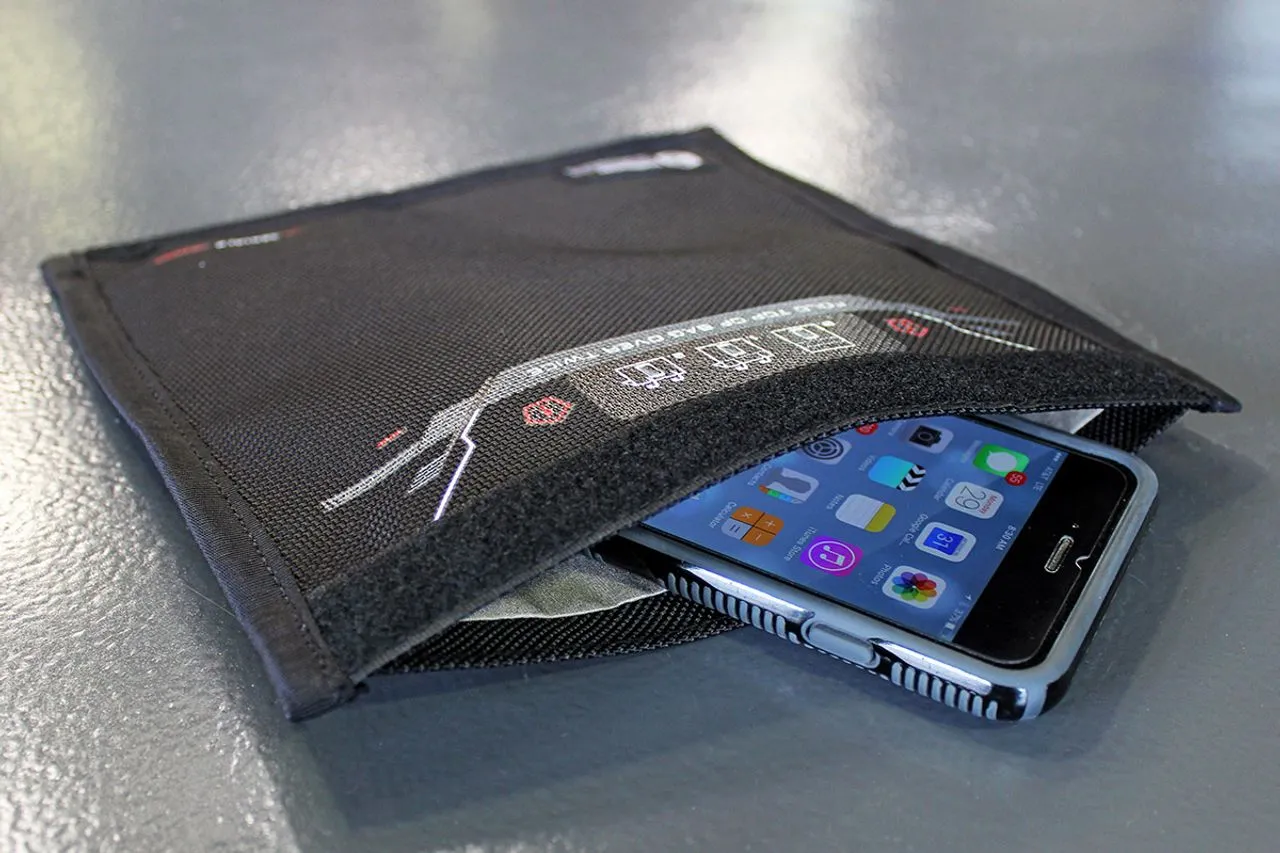
Search for a faraday bag and you’ll meet the same two names in every forum thread: Mission Darkness and GoDark. Both block signals. Both cite military standards. Both have loyal owners who insist the other one is overpriced.
Here’s the part that actually matters: these are the only two consumer brands in this space that paid an independent laboratory — the same one, it turns out — to verify their shielding claims. So this isn’t a comparison of marketing copy. It’s a comparison of receipts, and the receipts read differently in a few places that should decide your purchase.
The short answer is in the verdict above. The long answer, spec by spec, is below.
Mission Darkness vs GoDark at a glance
| Product | Score | Highlight | Price range | Buy |
|---|---|---|---|---|
| Mission Darkness Non-Window Faraday Bag for Phones | 8.6 | Certified shielding at the lowest price in the category | around $20 to $30 | MOS Equipment |
| Top pick GoDark Faraday Bag for Phones | 8.8 | Highest tested attenuation and the toughest everyday build | around $55 to $65 | GoDark Bags |
I’m comparing each brand’s standard phone-size bag because that’s where most people start, and because it’s the fairest one-to-one matchup. Both companies sell much bigger enclosures — more on that further down.
What each brand can prove — not just promise
A spec sheet is a promise. A certification is the receipt. So before anything else, I went looking for the receipts, the way I would with an NSF number on a water filter.
Mission Darkness is the consumer brand of MOS Equipment, a company that got its start supplying digital forensics teams — the people who bag a suspect’s phone so it can’t be remotely wiped before trial. Its TitanRF Faraday Fabric has published test results against two named standards: MIL-STD-188-125 (the US military’s high-altitude EMP shielding standard) and IEEE 299-2006 (the standard method for measuring shielding effectiveness of enclosures). The testing was performed by Keystone Compliance, an independent EMC laboratory, and MOS publishes the results, reporting an average attenuation of 80 to 100 dB across the tested range.
GoDark commissioned its testing from — no kidding — the same lab. Keystone Compliance tested GoDark’s two-layer RF shielding fabric against MIL-STD-188-125-2 for high-altitude EMP shielding, and GoDark publishes an average of 105 dB of attenuation, with product pages stating the fabric exceeds 100 dB.
One honest caveat on both: MIL-STD-188-125 was written for buildings — ground-based military facilities — so no pouch can be “certified” to it the way a respirator gets a NIOSH approval number. What both brands can truthfully say is that their fabric passed the standard’s shielding-effectiveness levels in an independent lab. That’s a meaningful receipt. It’s just worth knowing what kind of receipt it is.
If you want the fine print on how I verify claims like these, it’s all in how we research.
105 dB vs 80–100 dB: what the shielding numbers mean
On paper, GoDark’s 105 dB average beats Mission Darkness’s 80–100 dB. Before you treat that as the whole ballgame, here’s what the scale actually does: decibels are logarithmic. Every 10 dB cuts the signal by a factor of ten, so 80 dB means one ten-millionth of one percent of the signal gets through. Your phone loses its tower connection long, long before that.
For the everyday jobs — stopping location tracking, keeping a keyfob from being relay-attacked, making sure a found or seized device can’t be wiped — both fabrics are overkill by a comfortable margin. Practically speaking, a sealed bag from either brand takes a phone completely off the air.
Where the margin might matter is the insurance scenario: shielding a backup drive or an old phone against a grid-down event, where you’d want headroom against a strong, fast pulse rather than a cell tower. GoDark’s higher tested average and its water-and-puncture-resistant shell give it the edge as a set-and-forget vault. Mission Darkness answers with a different argument — at its price you can double-bag, and MOS’s own testing shows attenuation stacking with layers.
Both closures depend on you, though. Fold the Mission Darkness flap the full two turns; roll the GoDark top the full three. Every “this bag failed” post I traced back in owner reviews involved a shortcut seal.
Mission Darkness: forensic pedigree at a hardware-store price
The Non-Window Faraday Bag for Phones is the plainest thing MOS sells, and that’s its charm. Two layers of TitanRF fabric with dual-paired seams, a water-resistant ballistic nylon shell, a fold-over Velcro closure, and — a detail I love, because it tells you who the real customer is — a unique serial number and a clear ID pocket for evidence labels. This bag was designed to hold up in court, and it retails for less than most families spend on takeout.
Pros
- Cheapest lab-tested faraday bag from a major brand — easy to buy several
- Fabric tested to two named standards (MIL-STD-188-125 and IEEE 299-2006)
- Serialized bags and forensics pedigree — this is what evidence teams use
- Huge product line, from keyfob pouches to full duffels and dry bags
Cons
- Thin, unpadded shell — no drop or water protection for the device inside
- Velcro fold-over is slower and wears faster with daily open-and-close
- No satisfaction money-back guarantee, only a defect warranty
The tradeoffs are physical, not electromagnetic. There’s no padding, so the bag protects a phone from signals and nothing else. The Velcro fold-over is quick, but hook-and-loop is a wear item: open and close it five times a day and it will age faster than a buckle. And MOS backs the bag with a 12-month warranty and a 90-day defect window rather than any satisfaction guarantee — fair, but stingier than GoDark’s paper.
Where Mission Darkness runs away with it is breadth. MOS makes shielded pouches for keyfobs, window bags that let you see the screen, laptop and tablet sizes, waterproof Dry Shield roll-tops, and duffels big enough for a ham radio or a small generator. If you’re outfitting a whole household one paycheck at a time, staying inside one ecosystem at these prices is genuinely convenient.
GoDark: built like outdoor gear, priced like it
Pick up a GoDark bag after a Mission Darkness and the difference is immediate: this is luggage. The shell is 600D polyester with a polyurethane face coat and a TPU backing — water resistant and puncture resistant — over a layer of shock-absorbing foam and a soft felt liner. The closure is a roll-top with a buckle strap, the same mechanism dry bags use, and it gives you visual confirmation that the bag is actually sealed.
Pros
- Highest independently tested attenuation of the two (105 dB average)
- Padded, water- and puncture-resistant shell built for daily handling
- Roll-top buckle closure survives constant open-and-close better than Velcro
- 30-day money-back guarantee on top of the 1-year warranty
Cons
- Costs roughly twice as much as the equivalent Mission Darkness bag
- Fabric tested to one named standard, not two — no IEEE 299-2006 claim
- Smaller product range if you later want forensic or lab-style enclosures
That build costs real money — roughly double the Mission Darkness equivalent — and the specs you’re paying for are the ones you touch, not the ones you can’t see. GoDark’s fabric claims one named standard to Mission Darkness’s two; there’s no IEEE 299-2006 result published. The company softens the sticker with better paper, though: a 30-day, 100% money-back guarantee plus a warranty of at least one year.
My own bias, for what it’s worth: the drive with our family photo backups lives in a shielded pouch on the ready-room shelf, and it gets handled exactly twice a year. For that job the cheap bag is plenty. It’s the phone-size bag that leaves the house — daily commutes, hotel stays, kids’ devices on screen-free weekends — where GoDark’s buckle and padding stop being nice-to-haves and start being the whole point.
Price and warranty, side by side
- Mission Darkness phone bag: around $20 to $30. Twelve-month warranty, 90-day defect exchange, no money-back guarantee.
- GoDark phone bag: around $55 to $65. Minimum one-year warranty and a 30-day 100% money-back guarantee.
- Attenuation receipts: Mission Darkness 80–100 dB average, tested against MIL-STD-188-125 and IEEE 299-2006. GoDark 105 dB average, tested against MIL-STD-188-125-2. Both by Keystone Compliance.
Neither brand hides its pricing games in subscriptions or refills, which I appreciate. What you pay on day one is the whole cost of ownership.
Which faraday bag should you buy?
Buy GoDark if the bag will live in a backpack, a glovebox, or a kid’s overnight bag — anywhere it gets handled weekly. The padded shell, the dry-bag closure, and the money-back guarantee are worth the premium for gear in motion, and its higher tested attenuation makes it the cleaner choice for a long-term data vault too.
Buy Mission Darkness if you’re shielding on a budget, buying multiples, or want one brand to scale with — keyfob pouch by the door, phone bag in the go-bag, duffel for the radio gear. The shielding receipts are arguably the strongest in the business; you’re just trading away creature comforts and the refund policy.
Skip both if what you actually want is drop-and-crush protection for electronics — a faraday bag is a signal barrier, not a hard case — or if you were sold on blocking “EMF radiation” for health reasons. That’s not a problem these bags solve, and I’d rather lose the sale than borrow the claim.
Either way, you’re buying from the only two names in this category that bothered to get their homework graded. For how they stack up against the rest of the field, my full best faraday bags guide runs the same receipts-first test on everything else worth considering.
Prices checked on 7/3/2026 and subject to change. Confirm the current price at the store.
Cover photo: “MissionDarkness FaradayBag phone” by MIC85, via Wikimedia Commons, licensed under CC BY-SA 4.0.
Frequently asked questions
Do faraday bags actually block all signals?
A properly closed bag from either brand blocks cell (including 5G), Wi-Fi, Bluetooth, and GPS. Both fabrics were lab-tested at Keystone Compliance at attenuation levels far beyond what those signals need. The usual failure point is user error — a bag left partially open — not the fabric itself.
Is Mission Darkness a reputable brand?
Yes. Mission Darkness is the consumer line of MOS Equipment, whose shielding products are used in digital forensics — bags are serialized for evidence chain of custody. The TitanRF fabric carries published test results against MIL-STD-188-125 and IEEE 299-2006 from Keystone Compliance, an independent lab.
What does MIL-STD-188-125 mean on a faraday bag?
It is a US military standard for shielding facilities against high-altitude EMP. A bag cannot be formally certified to it — the standard covers buildings — but fabric can be tested against its shielding-effectiveness requirements. Both brands paid an independent lab to run that test and published passing results.
Can I test a faraday bag at home?
You can run a useful spot check: seal your phone inside, then call it and try locating it with Find My. No ring and no location update is a pass for cell and GPS. Home tests cannot measure attenuation in decibels, though — that requires calibrated lab equipment.
Will these bags protect electronics from an EMP?
Both fabrics passed independent testing against the shielding levels in MIL-STD-188-125, which was written for EMP protection, so a sealed bag is reasonable insurance for a backup phone or hard drive. No consumer product carries a guarantee for an event nobody can schedule a rehearsal for.