Best Faraday Bag for a Laptop: What Actually Blocks Signal
This article contains affiliate links: if you buy through them, we earn a small commission at no extra cost to you. It never changes our verdict — our research method is public. See how we research
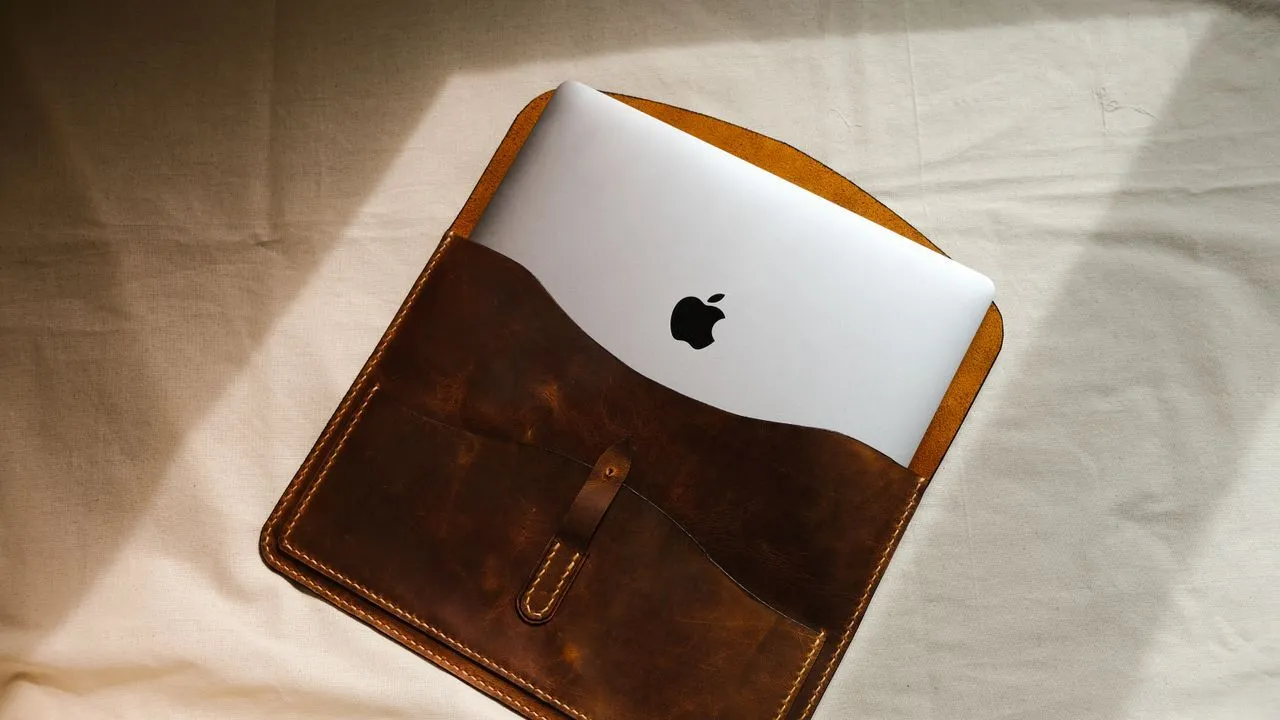
Most faraday bag lists are written for phones. Then you try to slide a 15.6-inch laptop into one and discover the hard way that “large” meant large for a tablet.
This list is only bags that actually fit a full-size laptop — 15 to 17 inches — with the closure sealed the way the manufacturer intends. Because that’s the detail marketing photos hide: a roll-top or fold-over closure eats two to four inches of the bag, and a bag that “fits” your laptop with the flap gaping open blocks exactly nothing.
Why bother at all? Three ordinary reasons, no bunker required. The old laptop holding your tax archive and photo backups shouldn’t be trackable or wirelessly reachable while it sits in a closet. A work machine in a hotel or airport doesn’t need to advertise itself to every scanner in range. And if you keep a retired laptop as your family’s offline backup, shielding it against a grid-down event costs less than one month of cloud storage. Plan for the Tuesday, not the apocalypse.
How a faraday bag works (the two-minute version)
Think of a faraday bag as a raincoat for radio waves. The bag is lined with fabric woven through with conductive metal — usually nickel and copper. When a signal like Wi-Fi or cellular hits that layer, the metal spreads the energy across its surface and cancels it out, so nothing reaches the inside. It’s the same reason your phone loses bars in a metal elevator, just engineered on purpose. No power, no battery, no software — the physics works whether it’s Tuesday or the end of the world. The catch is that the shield only works if it’s complete: a gap at the closure is a hole in the raincoat, which is why seal design matters as much as the fabric.
How I ranked these laptop faraday bags
A manufacturer’s claim is cheap to print; a third-party test isn’t. So each bag here got scored on the same five things I’d check for any shielding product:
- Proven attenuation. Shielding strength is measured in decibels (dB) — every 10 dB cuts the signal by 10x. I favored bags whose fabric was lab tested against named standards (MIL-STD-188-125-2 for EMP-grade shielding, IEEE 299-2006 for shielding effectiveness) over bags with a bare number on the box.
- Real interior size. Measured with the closure folded, from the manufacturer’s own published dimensions — not the exterior number in the product title.
- Seal design. A double fold-over or roll-top is the conservative choice; a magnetic flap is more convenient and slightly less airtight by design.
- Durability. Shell material, seams, padding, and how the closure holds up to use.
- Price band. What you actually pay per usable inch of shielded space.
| Product | Score | Highlight | Price range | Buy |
|---|---|---|---|---|
| Top pick Mission Darkness Non-Window Faraday Bag for Laptops | 9.1 | Certified shielding and a true 17 x 14 in interior for the money | around $90 to $100 | MOS Equipment |
| GoDark Faraday Sleeve for Laptops | 8.7 | Highest tested attenuation and the toughest weatherproof build | around $130 to $150 | GoDark Bags |
| SLNT Faraday Laptop Sleeve | 8.2 | Magnetic closure makes it the easiest to live with every day | around $130 to $140 | SLNT |
| Faraday Defense NX3 Laptop Bag | 8.0 | Triple-layer shielding at half the price of the big names | around $50 to $70 | Faraday Defense |
1. Mission Darkness Non-Window Faraday Bag for Laptops — best overall
Mission Darkness is the brand police forensics teams use to keep seized devices from being remotely wiped, and the laptop bag is their workhorse: two layers of TitanRF fabric, lab certified to both MIL-STD-188-125 and IEEE 299-2006, with the manufacturer listing 60 to 80 dB of average attenuation across Wi-Fi, Bluetooth, cellular including 5G, GPS, RFID, and NFC.
The number that won me over, though, is 17 x 14 inches — the interior, measured with the double roll closure folded down. That’s the roomiest honest measurement in this group. A 17-inch laptop fits. A 15.6-inch laptop fits with the charger, a phone, and a backup drive riding along. Nobody else on this list publishes a usable interior that generous at this price.
The trade-off is that it’s a shielding bag, not a padded case. The ballistic nylon shell is water resistant and tough, but thin — if the laptop gets dropped, the bag isn’t saving it. For shelf or safe storage, that’s irrelevant. For daily commuting, look at the SLNT below.
Pros
- TitanRF fabric lab certified to two named standards (MIL-STD-188-125, IEEE 299-2006)
- Biggest honest interior of the group — a 17 in laptop fits with the folds intact
- Double roll-and-Velcro closure is the conservative seal design done right
- Cheapest per usable inch from a major forensics-pedigree brand
Cons
- Thin, unpadded shell — it blocks signal, it does not absorb drops
- Velcro fold-over is slower than a magnetic sleeve for daily in-and-out
- No window means opening the bag to check which device is inside
2. GoDark Faraday Sleeve for Laptops — toughest build, highest attenuation
GoDark builds the bag I’d pick if the laptop is going in a go-bag instead of a closet. The shell is 600D polyester with a polyurethane face and TPU backing — water resistant, puncture resistant, welded seams — around a soft felt liner and two layers of RF shielding fabric that GoDark says was independently lab tested past 100 dB. The fabric also passed MIL-STD-188-125-2, the military standard for high-altitude EMP shielding, which is the certification that matters most if grid-down insurance is your reason for buying.
The roll-top closes with hook-and-loop tabs plus a buckle strap, and that redundancy is the right call for a bag that gets opened often. My gripe is transparency: GoDark makes you use their on-site fit tool instead of publishing plain interior dimensions. The Large covers most 15 to 17 inch machines, but measure your laptop and run their tool before ordering — and at $130 to $150 it costs half again what the Mission Darkness does.
If you’re weighing these two brands head to head, I broke down their phone-size bags in my Mission Darkness vs GoDark comparison.
Pros
- Highest attenuation claim of the group, backed by independent lab testing to over 100 dB
- Passed MIL-STD-188-125-2 HEMP shielding test — the standard that matters for grid-down storage
- Welded-seam, water- and puncture-resistant shell with a felt liner that babies the laptop
- Roll-top plus buckle survives daily open-and-close better than bare Velcro
Cons
- Priciest option here at roughly $130 to $150
- GoDark does not publish plain interior dimensions — you have to trust their fit tool
- Roll-top eats vertical space; oversized gaming laptops may only fit the Large
3. SLNT Faraday Laptop Sleeve — easiest for daily carry
SLNT solved the problem nobody else here bothered with: the closure you’ll actually use. Instead of a fold-and-Velcro ritual, the flap closes magnetically in about two seconds, and the sleeve looks like a normal office laptop sleeve — 400D weatherproof nylon, slim profile, a front slip pocket for cables. SLNT cites MIL-STD-188-125-2 compliance and shielding that exceeds IEEE 299-2006 across 1 to 40 GHz, with a 100+ dB blocking claim.
Two honest caveats. First, size: the biggest sleeve fits 15 and 16 inch laptops (interior 16.14 x 10.65 inches) — true 17-inch machines don’t fit, full stop. Second, the magnetic flap is a convenience trade: for a bag opened five times a day it’s fine, but for a laptop that will sit sealed for months I’d rather trust a double roll-top. This is the travel and commute pick, not the storage pick.
Pros
- Magnetic closure takes two seconds — the sleeve you will actually use daily
- Slim and office-normal looking; doubles as a regular padded laptop sleeve
- Cites both MIL-STD-188-125-2 and IEEE 299-2006 across 1–40 GHz
- Weatherproof 400D nylon shell with a useful outer pocket
Cons
- Tops out at 16 in laptops — true 17 in machines do not fit
- A magnetic flap is a less conservative seal than a double roll-top for long-term storage
- Costs about $140 while the roomier Mission Darkness bag costs less
4. Faraday Defense NX3 Laptop Bag — best budget faraday bag
The NX3 is the plain-label option: no padding, no pockets, no styling — just three layers of nickel/copper CYBER fabric (one more layer than anyone else here), a double-roll Velcro closure, and a price around $50 to $70. The 12 x 18 inch interior takes a 15.6-inch laptop easily; the 16 x 20 XL swallows a 17-inch machine with room for drives and a radio.
The reason it sits fourth: Faraday Defense states 85 to 90 dB of attenuation, but the product page names no third-party certification to back the figure. The construction approach is sound and the brand is established in the preparedness space, but an unverified number ranks below a verified one on my scorecard, every time. If the budget stops at $70, buy this and do the phone-call test the day it arrives.
Pros
- Around $50 to $70 — the cheapest laptop-size faraday bag from a known brand
- Three shielding layers where most rivals use two
- Double-roll Velcro closure, same conservative seal style as Mission Darkness
- XL and XXL sizes swallow a laptop plus chargers, radios, and hard drives
Cons
- No named third-party certification on the product page — the 85–90 dB figure is the maker's own
- Unpadded shell, so it needs a shelf or drawer, not a backpack life
- Plain storage-bag look and feel; closure is stiff when new
What actually matters when you buy (and what’s marketing)
Matters: interior dimensions with the closure folded. This is the single most common disappointment in owner reviews across all four brands — people buy on the exterior number. Measure your laptop (width x depth), add an inch each way, and compare against the interior spec.
Matters: the seal. Double fold-over or roll-top beats a single flap. Every fold is another barrier where signal has to sneak through.
Matters: named standards. MIL-STD-188-125-2 and IEEE 299-2006 are testable claims a lab either verified or didn’t. “Military-grade” by itself is a font choice.
Marketing: giant dB numbers with no test behind them. More dB is better, but 80 dB verified beats 120 dB asserted.
Marketing: EMP guarantees. No honest company promises your laptop survives a nuclear EMP. The certified-fabric bags are the best available insurance — that’s the accurate claim.
Who each bag is for — and who should skip it
Buy the Mission Darkness if you want the most verified shielding per dollar for a laptop that lives on a shelf, in a safe, or in a file cabinet. That’s where my own retired backup laptop sits — sealed on the ready-room shelf between the document binder and the weather radio.
Buy the GoDark if the bag rides in a vehicle or go-bag and will take abuse, or if EMP-grade certification is the whole point for you.
Buy the SLNT if the bag comes to work and hotels with you and gets opened daily — convenience you’ll actually use beats a stronger seal you won’t.
Buy the NX3 if you’re outfitting on a budget or shielding several devices at once and can accept a manufacturer’s number over a lab’s receipt.
Skip all of them if your laptop is your only computer and it’s in use every day. A faraday bag only protects a device that’s inside it — for a daily driver, your money does more in a good backup routine first. The boring policy comes before the exotic one.
Prices checked on 7/3/2026 and subject to change. Confirm the current price at the store.
Frequently asked questions
Do faraday bags actually work for laptops?
Yes — when the shielding fabric is intact and the closure is sealed the way the manufacturer intends. A quality bag blocks Wi-Fi, Bluetooth, cellular, and GPS so the laptop cannot send or receive anything. Verify yours at home: seal a phone inside and call it. It should go straight to voicemail.
What size faraday bag fits a 15.6-inch laptop?
A 15.6-inch laptop measures roughly 14.2 x 9.7 inches, so look for an interior of at least 15 x 11 inches after the closure folds down. The Mission Darkness laptop bag (17 x 14 inches inside) and the Faraday Defense NX3 in 12 x 18 both clear that with room for a charging cord.
Should the laptop be turned off inside a faraday bag?
Power it off — do not just close the lid. A sealed bag blocks every signal, so a sleeping laptop keeps hunting for Wi-Fi and drains its battery faster. For long-term storage, shut it down, charge it to roughly 50 to 80 percent, and pull it out to check it a few times a year.
Will a faraday bag protect a laptop from an EMP?
Probably — but nobody can honestly promise it. Bags whose fabric passes MIL-STD-188-125-2, the military high-altitude EMP shielding standard, are the strongest bet, which is why GoDark and Mission Darkness lead this list. Treat it as insurance: inexpensive to do, never fully guaranteed by anyone credible.
Can I just wrap my laptop in aluminum foil instead?
Foil conducts, but seams and pinholes leak signal, and one small tear can undo the whole wrap. Purpose-built bags use two or three layers of shielding fabric with sealed seams and a folded closure precisely to solve that problem. Foil is a stopgap for an afternoon, not a storage plan.