Best Faraday Bag for Car Key Fob: What Stops Relay Theft
This article contains affiliate links: if you buy through them, we earn a small commission at no extra cost to you. It never changes our verdict — our research method is public. See how we research
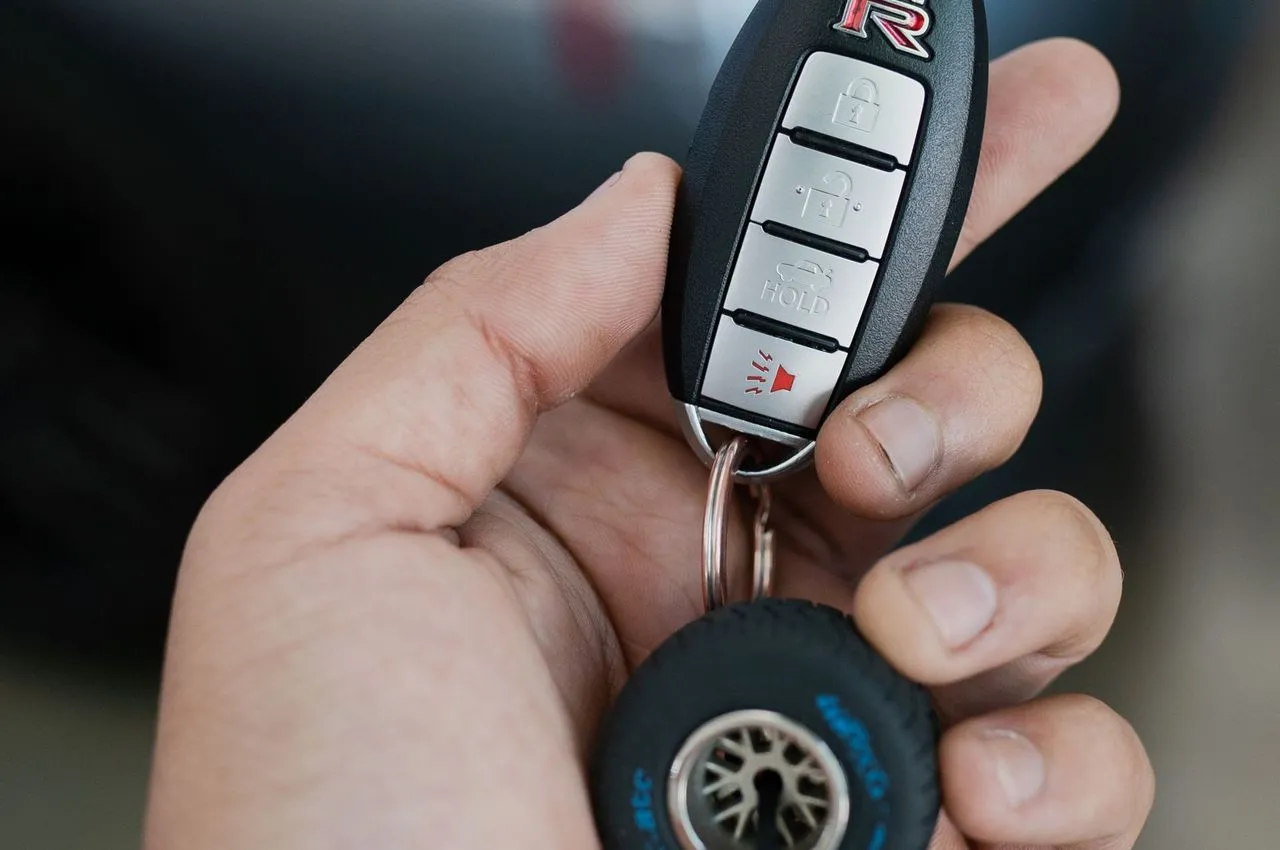
Keyless car theft doesn’t look like theft. Nobody breaks a window. One person stands near your front door with a device that reaches your fob on the entry table; an accomplice holds a second device at your car. The car hears its own key, unlocks, and starts. The whole thing takes under a minute, and your fob never left the house.
That’s a relay attack, and it’s not theoretical. When the National Insurance Crime Bureau bought one of these units and tested it across 35 vehicles with CarMax, it opened 19 of them and drove 18 away. Germany’s auto club ADAC has been running the same experiment for years across the industry: of 616 keyless models tested as of 2023, only 44 shrugged the attack off.
The fix, happily, is one of the cheapest in all of preparedness: a pouch that blocks radio. A faraday bag doesn’t outsmart the thief’s amplifier — it starves it. No signal out, nothing to relay. This guide ranks four of them, and because “it worked in the demo video” isn’t a standard, I ranked them the same way I rank everything with a shielding claim.
How relay theft works (and why a pouch beats an app)
Your keyless fob talks to the car on low-power radio — 315 MHz for most North American cars, 433 MHz for most of Europe. The car constantly listens for it, and proximity is the only password: if the car hears the fob, it assumes the driver is standing there. A relay unit simply stretches that conversation. In the NICB’s testing, the first device needed to get within about 10 feet of the fob — a front door or a wall doesn’t stop it — and could pipe the signal to a partner unit up to roughly 90 yards away.
That’s why the standard advice list runs out fast. Hiding keys deeper in the house helps until it doesn’t. Some newer fobs go to sleep when they sit motionless, and the ultra-wideband systems in ADAC’s short list of survivors genuinely resist relaying — check your owner’s manual, because if you have one of those, you can stop reading. For everyone else, a sealed conductive pouch ends the conversation entirely. Preparedness is insurance, not fear — and this policy costs less than a pizza.
How I ranked these key fob faraday bags
Every entry got scored on the same five things I use for any shielding product, most important first:
- Proof behind the shielding claim. Fabric tested against a named standard — MIL-STD-188-125 (the military EMP shielding spec) or IEEE 299-2006 (the standard method for measuring shielding effectiveness) — outranks a big decibel number with no lab behind it.
- Seal design. The shield is only as good as its closure. A double fold beats a single fold; anything beats a pouch left gaping in a bowl.
- Durability of the shield itself. The dirty secret of this category, repeated across owner reviews of every brand: flexible mesh fatigues. A pouch opened four times a day lives a harder life than a laptop bag opened four times a year.
- Real interior size. Modern fobs have grown — Tesla, BMW, and Mercedes fobs are the new size test.
- Price per protected fob. Most households need to shield two.
| Product | Score | Highlight | Price range | Buy |
|---|---|---|---|---|
| Top pick Mission Darkness Faraday Bag for Keyfobs (2-Pack) | 9.1 | Two lab-certified pouches for the price of one rival bag | around $15 to $20 for the 2-pack | Mission Darkness |
| GoDark Vault Key Fob Faraday Cage | 8.5 | Solid aluminum box — nothing to fold, nothing to wear out | around $49 to $56 | GoDark |
| SLNT Faraday Key Fob Bag | 8.3 | Certified shielding with the fastest closure of the fabric pouches | around $20 to $25 | SLNT |
| Faraday Defense JACKET Key Fob Dry Bag | 8.2 | Triple-layer shielding in a weatherproof TPU dry bag | around $20 to $25 | Faraday Defense |
1. Mission Darkness Faraday Bag for Keyfobs — best overall
Mission Darkness sells the pouch that settles the category, and it does it with receipts: three layers of TitanRF fabric on every interior side, dual paired seams, and lab testing against both named standards — MIL-STD-188-125 and IEEE 299-2006. This is the same fabric line police forensics teams use to keep seized devices off the network, shrunk to a 5 x 3.25 inch pouch with a 4.5 x 3 inch usable interior that takes the biggest current fobs.
Then there’s the price. Around $15 to $20 buys a two-pack — one pouch per driver, which is how most households actually need to deploy this. Nobody else on this list gets you two certified bags for less than anyone’s single bag. The fold-and-tuck closure with its elastic band is simple and effective, and the belt loop and keyring loop mean the pouch can live on the keychain itself instead of being the thing you forgot on the counter.
The honest caveat applies to every fabric pouch here, this one included: the closure only shields when you fold it properly, and metalized mesh can fatigue after months of daily flexing. Do the door-handle test when it arrives, then once a month after. Takes thirty seconds.
Pros
- Around $15 to $20 buys TWO bags — one per driver, cheapest certified shielding here
- Fabric lab-tested to both named standards (MIL-STD-188-125, IEEE 299-2006)
- 4.5 x 3 inch interior swallows oversized Tesla, BMW, and Mercedes fobs
- Belt loop and keyring loop so the pouch actually travels with the keys
Cons
- Fold-and-tuck closure only shields when you fold it right, every single time
- Thin unpadded nylon — a signal barrier, not a protective case
- Like every flexible pouch, the mesh can fatigue after months of daily folding — re-test it
2. GoDark Vault — best for the spot where your keys live
The GoDark Vault attacks the one weakness every fabric pouch shares. It’s not a bag at all — it’s a box milled from solid 2.1 mm aluminum with a felt-lined cavity and a hinged magnetic lid. There’s no mesh to crack, no fold to do wrong, no closure ritual for a tired spouse or a teenager to skip. Drop the fob in, the lid snaps down, done. That two-second habit is the entire product, and it’s the right design for the entry table, where relay thieves do their shopping and where a pouch tends to sit unsealed anyway.
What GoDark doesn’t publish is an attenuation figure or a named certification for the Vault, which normally costs a product dearly on my scorecard. I’m more forgiving here than I’d be with a fabric bag, because a continuous 2.1 mm aluminum enclosure is the textbook faraday cage — the physics argument is strong even where the paperwork is thin. Owners seem to agree: it averages 4.7 out of 5 across 230 reviews on the manufacturer’s site.
The real costs are practical. Around $49 to $56 protects a single fob, it’s too boxy for a pocket, and a second driver means a second Vault or a pouch. My compromise at home is exactly that split: a Vault-style rigid box by the door, fabric pouches for the road.
Pros
- Rigid aluminum can't flex-fatigue — solves the failure mode owner reviews report in fabric pouches
- One-hand magnetic lid takes two seconds, so the family actually uses it
- Felt-lined cavity doubles as storage for hardware wallets and backup USB drives
- 4.7/5 average across 230 owner reviews at the manufacturer
Cons
- No published attenuation figure or named certification — the design is the argument
- Around $49 to $56 shields exactly one fob; a certified 2-pack pouch costs a third of that
- Lives on a table or shelf — too boxy for a pocket
3. SLNT Faraday Key Fob Bag — best for the pocket
SLNT’s pouch is the one I’d carry. The Multishield fabric is MIL-STD-188-125-2 compliant and exceeds IEEE 299-2006 across 1 to 40 GHz — named standards again, not adjectives — in a 500D weatherproof polyester shell that weighs under an ounce. The closure is the selling point: fold the flap and it snaps shut with an audible click, which is easier to verify by feel than a tuck, and faster to repeat twenty times a day.
The interior runs a roomy 4.33 x 3.54 inches, enough for the chunkiest fob with a house key alongside, and the external loop clips to a bag or belt. Two trade-offs keep it off the top spot. A single fold plus snap is a less conservative seal than a double fold — fine for stopping a relay attack, but less margin than the geometry above it. And at around $20 to $25 for one bag, you’re paying the Mission Darkness two-pack price for half the coverage. SLNT’s stock also comes and goes; if the size you need is listed, don’t sit on it.
Pros
- Fabric compliant with MIL-STD-188-125-2 and exceeding IEEE 299-2006 — named standards, not slogans
- Fold-and-snap closure clicks shut audibly, easier to verify than tuck-style seals
- Roomy 4.33 x 3.54 inch interior takes the bulkiest fobs with a house key riding along
- Weatherproof 500D shell shrugs off pocket and glovebox life
Cons
- Single fold plus snap is a less conservative seal than a double fold-over
- One bag costs what Mission Darkness charges for two
- Popular sizes drift in and out of stock at the manufacturer
4. Faraday Defense JACKET — the weatherproof workhorse
Faraday Defense wraps three layers of its CYBER NC nickel/copper fabric — one more layer than most rivals — in a heavy TPU dry-bag shell, closed with a double-fold magnetic seal that’s both conservative in geometry and quick in practice. The company states better than 85 dB of attenuation from 400 MHz to 40 GHz, which comfortably covers the automotive bands. For a glovebox, a jacket pocket, or a rainy bike commute, the materials are the best matched to abuse of any fabric pouch here.
It ranks fourth for a familiar reason: that 85 dB figure is the manufacturer’s own, with no named third-party certification on the product page. A spec sheet is a promise; a certification is the receipt — and at around $20 to $25 per bag, the JACKET asks you to pay SLNT money on the maker’s word alone. The construction is sound and the brand is established in preparedness circles, but an unverified number sits below a verified one on this list, every time.
Pros
- Three shielding layers where most key pouches use one or two
- Double-fold magnetic closure — conservative seal geometry that still opens fast
- Water-resistant TPU shell suits gloveboxes, jacket pockets, and rainy commutes
- Slim profile expands around chunky fobs and a keychain
Cons
- The >85 dB figure is the maker's own — no named third-party certification on the page
- One bag runs about $22; the certified Mission Darkness 2-pack undercuts it
- TPU shell shows scuffs faster than ballistic nylon
Foil, tins, freezers: what works and what’s folklore
Aluminum foil mostly works and reliably disappoints. A tight double wrap attenuates hard, but seams leak, pinholes leak, and the wrap degrades every time you unwrap the keys. As a stopgap the night you read this, sure. As a system, no.
A metal tin — the old cookie tin with a snug metal lid — is a legitimate poor-man’s faraday cage and beats foil. Test it with your own fob at your own door before trusting it; lid fit is everything.
The freezer and the microwave are folklore with side effects. Some appliances shield enough, some don’t, and a fob that goes through a wash cycle of condensation — or a microwave someone absent-mindedly starts — dies for nothing. Skip both.
A dedicated pouch does what all the improvisations do, verifiably, for about $15. If you’re curious how far the same fabric goes — including whether it earns its keep against bigger events than car theft — I walked through the evidence in do faraday bags actually protect against EMP, and my faraday bag guide by use case covers the phone, laptop, and whole-family sizes. For the head-to-head on the two biggest brands in this space, see Mission Darkness vs GoDark.
Who each pick is for — and who should skip it
Buy the Mission Darkness two-pack if you want the most verified shielding per dollar and need to cover two drivers. This is the default answer, and it’s the one in the bowl by my own front door.
Buy the GoDark Vault if the failure you’re guarding against is human — the unsealed pouch, the skipped fold, the fabric quietly wearing out. A rigid box forgives habits that a bag punishes.
Buy the SLNT if the pouch rides in your pocket daily and you want certified fabric with the fastest closure you’ll actually keep using.
Buy the Faraday Defense JACKET if weather resistance matters most and you’re comfortable with a manufacturer’s number instead of a lab’s.
Skip all of them if your fob already resists relaying — ultra-wideband systems on ADAC’s protected list, or a fob with a motion-sleep mode you’ve confirmed in the manual — or if your car needs the key physically inserted, in which case there’s no signal to steal. And if you park inside a locked garage with the keys stored deep in the house, you’ve already raised the cost of the attack; the pouch is a two-dollar-a-year upgrade on top, not a requirement.
Prices checked on 7/22/2026 and subject to change. Confirm the current price at the store.
Frequently asked questions
Do faraday pouches for car keys actually work?
Yes — a properly sealed faraday pouch blocks the fob's radio signal completely, and a relay attack cannot amplify a signal that never leaves the bag. The catch is the seal: fold the closure the way the manufacturer intends and test it at your own car door before you trust it.
How do I test a key fob faraday bag at home?
Seal the fob inside, walk to your car, and hold the bag right against the door handle. If the doors unlock, the pouch leaks. Repeat the test near the trunk and the start button, then re-test every month or two — shielding fabric can wear out from folding.
Why did my faraday key pouch stop working?
Flexible pouches shield with a metalized mesh woven into fabric, and thousands of open-and-fold cycles can crack it — owner reviews across brands report failures after months of daily use. That's normal wear, not a defect. Re-test monthly, and consider a rigid aluminum box for the spot where keys live.
Will aluminum foil stop a relay attack?
Mostly, but not reliably. Foil conducts, so a tight double wrap knocks the signal down hard — yet seams and pinholes leak, and the wrap loosens every time you grab the keys. A sealed metal tin does better than foil. A certified pouch costs about $15 and removes the guesswork.
How far away can thieves pick up a key fob signal?
In the National Insurance Crime Bureau's testing, the relay unit had to come within about 10 feet of the fob — through a front door or wall is fine — while the second unit worked up to roughly 90 yards away at the car. Keys on an entry table are squarely in range.
Do newer cars still need a faraday key pouch?
Many do. In ADAC's running test of keyless models, only 44 of 616 resisted a relay attack as of 2023 — the protected ones mostly use ultra-wideband fobs. Some fobs also sleep when motionless. If yours does neither, a pouch is the cheapest fix there is.