Best Faraday Bags for Preppers
This article contains affiliate links: if you buy through them, we earn a small commission at no extra cost to you. It never changes our verdict — our research method is public. See how we research
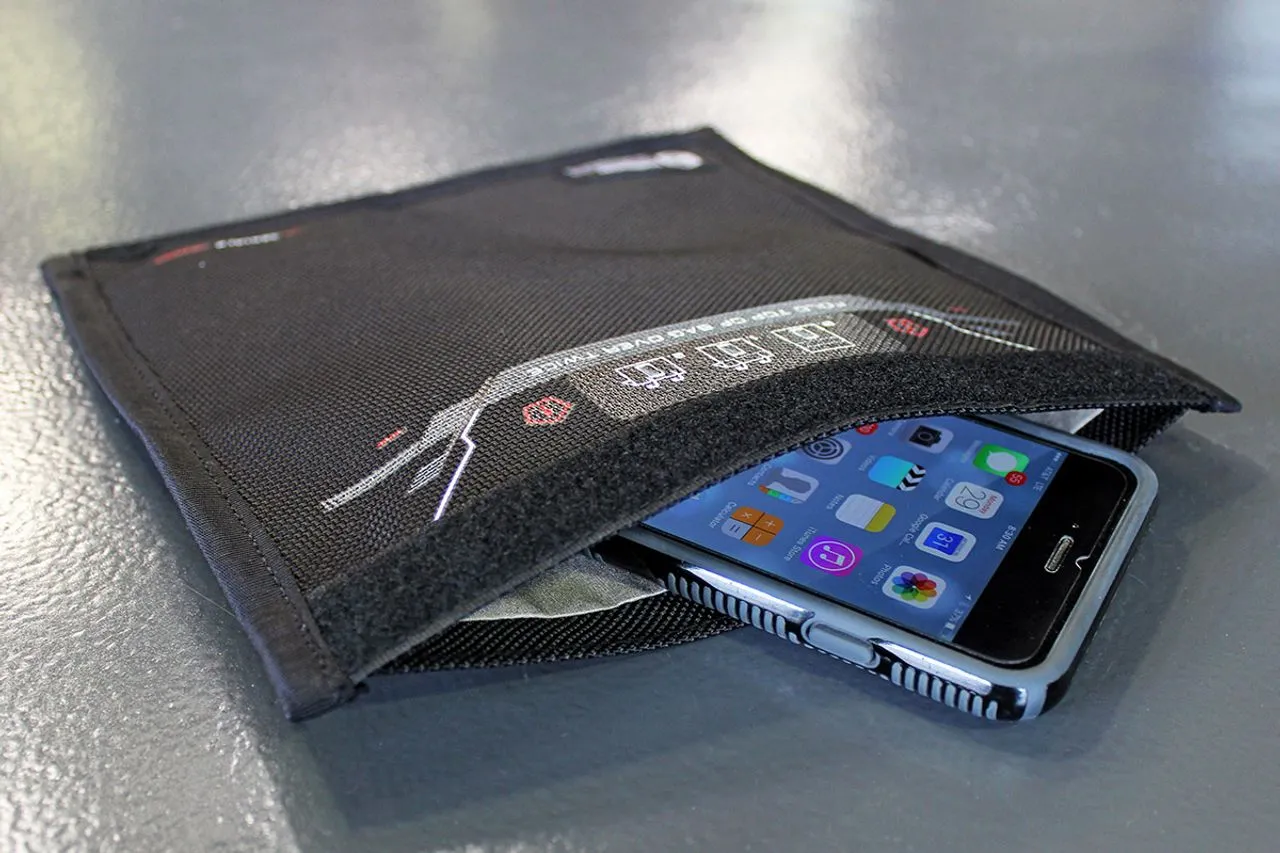
Search “best faraday bags” and you get a pile of listicles ranking a keyfob pouch against a laptop sleeve against a duffel, as if they were competing for one spot. They aren’t. A faraday bag is defined by the device it shields and the place it lives — a pouch by the front door, a sleeve in a go-bag, a duffel on the ready-room shelf. Rank them against each other and you end up buying the wrong size for the job you actually have.
So this guide is built the way a real plan is: by use case. Four jobs — your phone and everyday carry, a laptop, a whole family’s devices, and the tightest budget — and the bag I’d put in each slot. I’ve compared the top contenders head-to-head elsewhere on this site; this page is the map, and the deep dives are linked where they belong.
Research-driven, not staged — specs verified, certifications checked, recalls tracked, thousands of real owner reviews cross-referenced.
How I ranked the best faraday bags
Every bag here met the same first test, and it’s the thread that runs through everything I review: a spec sheet is a promise, a certification is the receipt. Any company can screen-print “military-grade, 120 dB” on a pouch. What I weigh is whether an independent lab measured the fabric against a named standard — MIL-STD-188-125-2, the military spec for high-altitude EMP shielding, or IEEE 299-2006, the standard method for measuring shielding effectiveness. A tested 80 dB beats an asserted 120 dB every single time.
After proof, I looked at four practical things: real interior size measured with the closure sealed, the seal design (a double roll-top or fold-over beats a single flap), the shell and padding, and the price band per usable inch of shielded space. Prices are ranges on purpose — they move, and the date at the bottom tells you when I last checked.
Two brands do the receipts properly. Mission Darkness — the consumer line of MOS Equipment, whose bags police forensics teams use to keep seized phones from being wiped — publishes Keystone Compliance results against both named standards. GoDark had the same lab test its fabric and publishes a 105 dB average. Everyone else on the market is either riding those two coattails or asking you to trust a number with no lab behind it.
| Product | Score | Highlight | Price range | Buy |
|---|---|---|---|---|
| Top pick GoDark Faraday Bag for Phones | 8.8 | Highest tested attenuation and the toughest everyday build | around $55 to $65 | GoDark Bags |
| Mission Darkness Non-Window Faraday Bag for Phones | 8.6 | Certified shielding at the lowest price in the category | around $20 to $30 | MOS Equipment |
| Mission Darkness Non-Window Faraday Bag for Laptops | 9.1 | Certified shielding and a true 17 x 14 in interior for the money | around $90 to $100 | MOS Equipment |
| Mission Darkness X2 Faraday Duffel Bag | 8.5 | One shielded bag for a whole family's devices, plus a detachable pouch | around $280 to $320 | MOS Equipment |
Best faraday bag for a phone and EDC: GoDark Faraday Bag
The job: the bag that leaves the house. A daily commute, a hotel safe, a kid’s device on a screen-free weekend, a key fob parked by the door where relay thieves can’t copy it — though if car keys are the whole mission, I ranked the dedicated key fob faraday bags separately, two-pack pouches and an aluminum vault included.
The GoDark phone bag is the one I’d hand most people first, because it’s built like the gear it travels with. The shell is 600D polyester with a polyurethane face and TPU backing — water and puncture resistant — wrapped around shock-absorbing foam and a felt liner, and it closes with a roll-top and buckle strap that gives you visual proof the bag is actually sealed. Its two-layer fabric was tested by Keystone Compliance to a 105 dB average against MIL-STD-188-125-2, the highest verified attenuation in this roundup.
The catch is price: at roughly $55 to $65 it costs about double the budget pick below, and its fabric carries one named standard to Mission Darkness’s two. For a bag that gets handled weekly, I think the padded shell and the money-back guarantee earn the premium.
Pros
- Highest independently tested attenuation of the two (105 dB average)
- Padded, water- and puncture-resistant shell built for daily handling
- Roll-top buckle closure survives constant open-and-close better than Velcro
- 30-day money-back guarantee on top of the 1-year warranty
Cons
- Costs roughly twice as much as the equivalent Mission Darkness bag
- Fabric tested to one named standard, not two — no IEEE 299-2006 claim
- Smaller product range if you later want forensic or lab-style enclosures
I put it head-to-head with its only real rival in my Mission Darkness vs GoDark comparison — the full breakdown of price, warranty paper, and which one belongs in a glovebox versus a shelf.
Best value faraday bag: Mission Darkness Non-Window Phone Bag
The job: shielding on a budget, or buying in multiples — a pouch by the door, one in the go-bag, one for each kid’s phone — without spending like it’s outdoor gear.
This is the plainest thing MOS makes and that’s the whole appeal: two layers of TitanRF fabric with dual-paired seams, a water-resistant ballistic nylon shell, a fold-over Velcro closure, and — a detail that tells you who really buys these — a serial number and a clear ID pocket for evidence labels. The fabric is lab-tested to two named standards (MIL-STD-188-125 and IEEE 299-2006) at an 80 to 100 dB average, and it retails for less than most families spend on takeout. On shielding receipts per dollar, nothing beats it.
You give up creature comforts to hit that price: no padding, so it guards against signals and nothing else, and Velcro wears faster than a buckle if you open it five times a day. For a bag that mostly sits sealed, none of that matters.
Pros
- Cheapest lab-tested faraday bag from a major brand — easy to buy several
- Fabric tested to two named standards (MIL-STD-188-125 and IEEE 299-2006)
- Serialized bags and forensics pedigree — this is what evidence teams use
- Huge product line, from keyfob pouches to full duffels and dry bags
Cons
- Thin, unpadded shell — no drop or water protection for the device inside
- Velcro fold-over is slower and wears faster with daily open-and-close
- No satisfaction money-back guarantee, only a defect warranty
Best faraday bag for a laptop: Mission Darkness Laptop Bag
The job: the retired laptop holding your tax archive and family photos, sealed on a shelf so it can’t be tracked or wirelessly reached — plus grid-down insurance for the same machine.
Laptops are where “large” bags embarrass themselves: a roll-top eats three or four inches, and a bag that fits your 15.6-inch machine with the flap gaping open shields exactly nothing. The Mission Darkness laptop bag wins here on an honest number — a true 17 x 14 inch interior measured with the double-roll closure folded, the roomiest real measurement in its class — over TitanRF fabric certified to both named standards. A 17-inch laptop fits; a 15.6-inch one fits with the charger and a backup drive along for the ride.
It’s a shielding bag, not a padded case, so it’s a shelf-and-safe tool rather than a daily commuter. If the bag needs to survive a backpack, or you want a magnetic closure you’ll actually use every day, the rugged GoDark sleeve and the slim SLNT sleeve are the two I’d size up instead.
Pros
- TitanRF fabric lab certified to two named standards (MIL-STD-188-125, IEEE 299-2006)
- Biggest honest interior of the group — a 17 in laptop fits with the folds intact
- Double roll-and-Velcro closure is the conservative seal design done right
- Cheapest per usable inch from a major forensics-pedigree brand
Cons
- Thin, unpadded shell — it blocks signal, it does not absorb drops
- Velcro fold-over is slower than a magnetic sleeve for daily in-and-out
- No window means opening the bag to check which device is inside
I ranked four full-size options — including a budget triple-layer bag under $70 — in the best faraday bag for a laptop guide, sorted by verified shielding, honest interior size, and seal design.
Best faraday bag for a family kit: Mission Darkness X2 Duffel
The job: shielding a household’s electronics at once — laptops, tablets, several phones, a radio, backup drives — without buying and tracking a drawer full of separate pouches.
When you’re outfitting a whole family, one big bag beats six little ones. The X2 duffel is a 23 x 10 x 10 inch shielded cavity lined on every side with two layers of TitanRF fabric, tested to the same two named standards as the rest of the line. Its trick feature is a detachable, separately shielded MOLLE pouch on the front — the only consumer faraday bag I know of that lets you pull one device in or out without breaking the shield on everything else in the main compartment.
Two honest notes. Its 60 to 80 dB average is lower than the phone bag’s — still far past what tracking, theft, or a backup drive ever needs, but worth knowing. And at roughly $280 to $320 it’s a real purchase; this is the bag for a household that’s genuinely shielding many devices, not a first buy. For most people the phone bag comes first and this comes later, if ever.
Pros
- Only consumer faraday bag with a detachable shielded pouch — isolate one device without opening the main cavity
- Same TitanRF fabric lab tested to two named standards (MIL-STD-188-125, IEEE 299-2006)
- 23-inch cavity swallows a whole household's electronics in a single shielded bag
- Water-resistant ballistic nylon shell built to be carried, not just shelved
Cons
- Expensive — several times the price of a single phone bag
- 60–80 dB average is lower than the brand's phone bag (still far past everyday needs)
- Big and heavy; overkill unless you are genuinely shielding many devices at once
Does a faraday bag really protect against an EMP?
Short version: very likely, for a small unplugged device in a certified bag — and anyone promising you certainty, in either direction, is selling something. The fabrics that passed MIL-STD-188-125-2 are the strongest consumer bet against the fast E1 pulse, but no bag has ever faced a real high-altitude nuclear EMP, because the last US test was in 1962. So I buy these for the everyday payoffs and treat EMP coverage as the free insurance rider.
If that’s the question that brought you here, I wrote the whole thing out — the physics, what the government’s EMP Commission report actually found, and why aluminum foil and microwave ovens don’t hold up — in do faraday bags actually protect against EMP.
What actually matters when you buy (and what’s marketing)
Matters: a named standard behind the number. MIL-STD-188-125-2 and IEEE 299-2006 are claims a lab either verified or didn’t. “Military-grade” on its own is a font choice.
Matters: the seal. A double fold-over or roll-top beats a single magnetic flap for long-term storage — every fold is another barrier. A magnetic closure wins only where you’ll open the bag daily and value the two-second convenience.
Matters: interior size with the closure folded. The single most common disappointment in owner reviews is buying on the exterior number. Measure your device, add an inch each way, and check it against the interior spec.
Marketing: giant dB numbers with no test behind them. More dB is better, but verified 80 beats asserted 120. Marketing: “EMP proof.” No honest brand promises your electronics survive a nuclear pulse; the accurate claim is “certified fabric, best available insurance.”
Which faraday bag should you buy?
Buy the GoDark phone bag if you want one bag for most jobs and it’ll get handled weekly — the padded, tested, guaranteed pick for gear in motion.
Buy the Mission Darkness phone bag if you’re shielding on a budget or buying several — the strongest shielding receipts per dollar in the category, comforts traded away.
Buy the Mission Darkness laptop bag if you keep a retired laptop as an offline backup and want the roomiest honest interior for the money on a shelf.
Buy the Mission Darkness X2 duffel if you’re shielding a whole household’s electronics at once and want one bag with a detachable pouch instead of a scattered pile of pouches.
Skip all of them if what you actually want is drop protection — a faraday bag is a signal barrier, not a hard case — or if you were sold on blocking “EMF radiation” for your health. That’s not a problem these bags solve, and I’d rather lose the sale than borrow the claim. And if your emergency shelves are still bare, a faraday bag isn’t first: your opening preparedness dollars do more in stored water and food. Preparedness is insurance, not fear — buy the layer you’ll actually use.
Prices checked on 7/3/2026 and subject to change. Confirm the current price at the store.
Cover photo: “MissionDarkness FaradayBag phone” by MIC85, via Wikimedia Commons, licensed under CC BY-SA 4.0.
Frequently asked questions
What is the best faraday bag for preppers?
There is no single winner — pick by the job. For a phone or EDC the GoDark bag leads on tested shielding and build; the Mission Darkness phone bag is the best value. For a laptop, the Mission Darkness laptop bag; for a whole household, the Mission Darkness X2 duffel. Most families end up owning two sizes.
Are expensive faraday bags actually better than cheap ones?
Not automatically. The thing worth paying for is a fabric that passed independent lab testing against a named standard, and the cheapest lab-tested bag here costs about $20. Extra money buys padding, tougher shells, and better closures — real comfort-and-durability upgrades, but not necessarily more shielding than a verified budget bag.
How many decibels of shielding does a faraday bag need?
Far less than the good ones offer. Every 10 dB cuts the signal tenfold, so 60 dB blocks all but a millionth and takes a phone off the air completely. The certified bags here run 60 to 105 dB average — overkill for tracking and theft, and the strongest available insurance for grid-down storage.
Do I need a faraday bag if I already store water and food?
Store water and food first — those cover the emergencies you are far more likely to face. A faraday bag is a second-tier buy that earns its keep every ordinary week: it stops phone tracking, blocks car-key relay theft, and shields a backup drive. Add one once the basics are squared away.
Can I test whether a faraday bag works at home?
Yes, in two minutes. Seal a phone inside the way the manufacturer instructs, then call it — it should go straight to voicemail — and check that Find My shows it offline. That confirms the everyday signals are blocked. Home tests cannot measure attenuation in decibels; only a calibrated lab can.
What size faraday bag should I buy first?
Start with a phone-size bag — it covers the most common jobs (tracking, key-fob relay theft, a bagged backup phone) for the least money. Add a laptop bag if you keep a retired machine as an offline backup, and a duffel only if you are shielding several devices at once.