How Much Should a Bug Out Bag Weigh?
This article contains affiliate links: if you buy through them, we earn a small commission at no extra cost to you. It never changes our verdict — our research method is public. See how we research
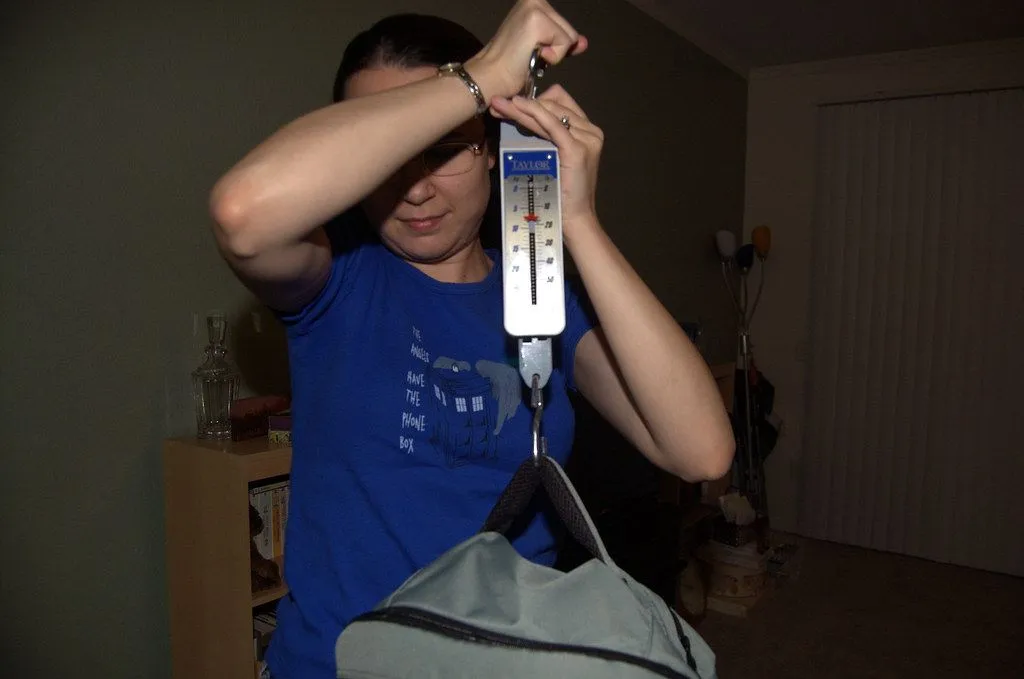
Every bug out bag thread eventually hits the same wall: someone posts a packing list that adds up to 65 pounds, someone else says their bag is 20 and they’re still not sure that’s light enough, and nobody agrees on the number because almost nobody tested it on actual stairs with an actual body. I’ve spent enough hours with a kitchen scale and a loaded pack on my own shoulders to tell you the honest range — and the one line item that wrecks it for almost everyone.
Research-driven, not staged — specs verified, certifications checked, recalls tracked, thousands of real owner reviews cross-referenced.
The short answer: 10% to 20% of your body weight
For a civilian bug out bag — something you might carry on foot, without training for it, possibly with a kid on one hip — the workable range is 10% to 20% of your body weight. That puts a 150-lb adult somewhere between 15 and 30 lbs fully packed, and a 200-lb adult between 20 and 40 lbs. Skew toward the low end if you’re carrying a dependent, climbing stairs, or covering real distance; skew toward the high end only if you’re fit, conditioned, and have actually walked the load.
Here’s that range translated into pounds, because a percentage you can’t picture isn’t useful at 2 a.m.:
| Body weight | 10% | 15% | 20% |
|---|---|---|---|
| 120 lbs | 12 lbs | 18 lbs | 24 lbs |
| 150 lbs | 15 lbs | 22.5 lbs | 30 lbs |
| 180 lbs | 18 lbs | 27 lbs | 36 lbs |
| 220 lbs | 22 lbs | 33 lbs | 44 lbs |
That’s the number to pack toward. The rest of this article is about the one thing that blows straight past it, and why borrowing a bigger number from military doctrine is a mistake for almost every household.
Why a percentage beats a flat number in pounds
Most forum advice gives you a flat figure — “25 pounds,” “keep it under 30” — as if a 5’2” adult and a 6’2” adult should pack identically. They shouldn’t. A percentage of body weight scales the load to the frame carrying it, which is the entire reason researchers use it instead of a fixed number in the first place.
It isn’t a perfect fix. Road-marching research on soldiers has found that smaller individuals tend to bear a greater relative load and more joint stress at the same percentage than larger ones do, because body size doesn’t scale evenly with bone and joint tolerance. So treat 10-20% as the honest starting range, not a guarantee — the walk test later in this article is what actually confirms the number for your body, not the math.
What the research actually says — and why the military’s number isn’t yours
This is where most bug out bag content gets sloppy: it quotes a soldier’s load limit and applies it to a parent evacuating with a toddler, and the two have almost nothing in common.
NATO doctrine permits deployed troops to carry loads of up to 45% of body weight. A 2021 military load-carriage review notes that real-world loads routinely exceed even that ceiling on long movements. U.S. Army road-marching guidance sets a more conservative target — under 30% of body weight where possible — specifically to limit lower-extremity injury risk, and flags that smaller soldiers face disproportionate joint loading at the same percentage. Go back further and the number gets stricter still: a 1920 British Army board capped the marching soldier’s load at roughly one-third of body weight, a figure the U.S. later split into 30% for a fighting load and 45% for a soldier on the march carrying everything he owns.
Here’s the detail that matters for you: every one of those numbers describes a person who trains specifically for loaded marching, often moves in formation, and has medical support within reach if a joint gives out. None of that describes a civilian leaving a building at midnight with a sleeping six-year-old over one arm. Plan for the Tuesday, not the apocalypse — the civilian 10-20% range exists precisely because it assumes an untrained body, uneven ground, stairs, and zero backup if something goes wrong.
The water math that blows past your budget
Here’s the number that changes everything, and it isn’t a gear spec — it’s physics. A U.S. gallon of water weighs 8.34 lbs. The Red Cross’s own evacuation guidance calls for one gallon per person per day, and recommends at least a three-day supply. Do that math honestly and water alone comes to just over 25 lbs — before a single ounce of food, a first aid kit, a flashlight, or a change of clothes goes in the bag.
Run that against the table above: a 150-lb adult’s entire 20% budget is 30 lbs. A true three-day gallon count eats 25 of it, leaving five pounds for everything else you actually need to survive the walk. That’s not a packing failure. That’s the math telling you the bottled-water plan was never going to fit a carryable bag, no matter how disciplined the rest of your list is.
This is the exact reason a go bag and a bug out bag solve the water problem differently. I covered the bigger picture in go bag vs bug out bag — the short version is that the full gallon count belongs in your car or at home, where weight is free, not on your back.
How a filter fixes the math
A compact water filter weighs ounces, not pounds, and it turns “carry three days of water” into “carry enough to reach the next water source, then make more.” That’s the swap that actually closes the gap between a 20-pound target and real survival math.
- Sawyer Squeeze full kit: about 8.2 oz — roughly half a pound — and it fills pots and bottles for more than one person, not just the one holding it.
- LifeStraw Peak straw: about 2.3 oz, cheap enough to drop one in a side pocket as pure backup.
Swap a gallon jug for either filter plus a single empty bottle, and you’ve traded roughly 8 pounds of carried water for well under a pound of gear — assuming you can identify a water source along your route, which is the one condition that makes this trade work. I ran the two head-to-head, including which one actually fills a container versus which one only serves a single sipper, in my Sawyer Squeeze vs LifeStraw comparison, and the wider field of options lives in my best water filter for emergency preparedness guide.
For the sipping-only backup, the LifeStraw earns its keep purely on weight:
Where the rest of the ounces go
Water is the single biggest lever, but food is the second, and it’s worth sizing honestly rather than guessing. A Mountain House 3-Day supply kit weighs 3.6 lbs for nine pouches — about 1,706 calories a day by the manufacturer’s own figure, which plan on supplementing if you’re doing hard physical work. That’s a known, weighable quantity you can drop into the budget without surprises, unlike a shopping-bag assortment of granola bars and canned goods that nobody has actually put on a scale.
Beyond water and food, the rest of a lean bug out bag — shelter layer, fire-starting, first aid, a multi-tool, navigation — should add up to single-digit pounds if you’re buying compact, purpose-built gear instead of duplicating what’s already in your garage. If your list is heavier than that before food and water even enter the picture, the fix is almost never a bigger pack. It’s a shorter list.
How to actually weigh and test your bag
Math on a page is a starting point. The only test that actually confirms a load is carryable is a body carrying it.
- Weigh the packed bag on a bathroom scale — not estimated, weighed. Most people guess 30% light on a fully loaded pack.
- Walk it for 30 minutes on terrain close to your real evacuation route. If you live above the ground floor, that means stairs, not a flat sidewalk.
- Watch for the tells: burning shoulders or a forward lean within the first ten minutes means the number is too high for your body today, regardless of what the percentage math said on paper.
- Retest after any change — new gear, a different pack, six months of life. A bag that was fine at 35 isn’t automatically fine at 42.
- Pack the heaviest items closest to your back, not at the bottom. The same total weight carried poorly feels — and strains joints — like a heavier bag.
Who can carry more — and who should carry less
Carry toward the higher end of 20% if you’re an adult in good condition, you’ve actually walked the loaded pack on your real route, and you’re not responsible for getting anyone else out the door. Carry well under 10% if you’re also carrying a child, have a joint condition, or your evacuation realistically includes several flights of stairs — I walked through the small-space, stairs-only version of this problem in my emergency preparedness checklist for apartments.
And if you’ve read all the math above and your honest answer is “I’m not carrying three days of gallons anywhere” — good. That’s not a failure of willpower. That’s you doing the arithmetic correctly before a bad night forces you to do it badly.
Prices checked on 10/19/2026 and subject to change. Confirm the current price at the store.
Cover photo: “J.C.’s backpack weight: 17 lbs” by Puggles, via Flickr, licensed under CC BY 2.0.Frequently asked questions
How much should a bug out bag weigh?
For most adults, 10% to 20% of body weight is the workable range — about 15 to 30 pounds. A 150-lb adult should land between 15 and 30 lbs fully packed. Go lighter if you're carrying a child, climbing stairs, or covering real distance on foot; go toward the high end only if you're fit, conditioned, and tested the load.
What percentage of body weight should a backpack be?
Civilian guidance clusters around 10% to 20% for a pack you might carry for miles without training for it. Military doctrine allows more — up to 30% to 45% — but that's for conditioned personnel who train specifically for loaded marching. Borrowing the soldier's number for an untrained civilian evacuating with kids is how bags become yard-sale donations.
Is 20 pounds too heavy for a bug out bag?
Not usually — 20 lbs sits inside the 10-20% range for most adults between 100 and 200 lbs, and it's the figure several preparedness writers land on after actually walking with a loaded pack. It can still be too heavy for a smaller adult, someone with joint issues, or anyone who hasn't tested it on stairs. The number matters less than the walk test.
Why do military load-carriage limits not apply to a bug out bag?
NATO doctrine permits loads up to 45% of body weight for deployed troops, and a widely cited U.S. Army figure sets 30% as a safer ceiling to limit lower-extremity injury. Both numbers describe conditioned adults who train under load, often moving in formation with medical support nearby. A civilian evacuating alone, possibly with children, is solving a different problem with a different body.
How much does a gallon of water weigh, and why does it matter for bag weight?
A U.S. gallon of water weighs 8.34 lbs. The Red Cross recommends one gallon per person per day for three days — 25 lbs of water alone before you pack food, a first aid kit, or a flashlight. That single line item is why bottled water and a 20-pound target can't coexist, and why a filter changes the math.
How do I know if my bug out bag is too heavy?
Weigh it on a bathroom scale, then walk it for 30 minutes on the actual terrain you'd evacuate through — stairs included if you're above the ground floor. Burning shoulders or a forward lean within the first ten minutes means the number on the scale is already too high for your body, whatever the percentage says.