Best Water Filter for Emergency Preparedness: 4 Scenarios
This article contains affiliate links: if you buy through them, we earn a small commission at no extra cost to you. It never changes our verdict — our research method is public. See how we research
Most “best water filter” lists rank a countertop purifier against a two-ounce straw as if they were competing for the same job. They aren’t. One is built for the tap water you drink every Tuesday; the other is built for the creek behind a highway rest stop. Ranking them against each other is how people end up with a $400 machine that dies with the power grid and no plan B.
So this guide is organized the way an actual emergency plan is: by scenario. Four filters, four different failures — everyday tap water, a multi-day outage, an evacuation bag, and the glovebox you never think about. I’ve compared the top two contenders in each category head-to-head elsewhere on this site; this page is the map, and the deep dives are linked where they belong.
Research-driven, not staged — specs verified, certifications checked, recalls tracked, thousands of real owner reviews cross-referenced.
Stored water first, filter second
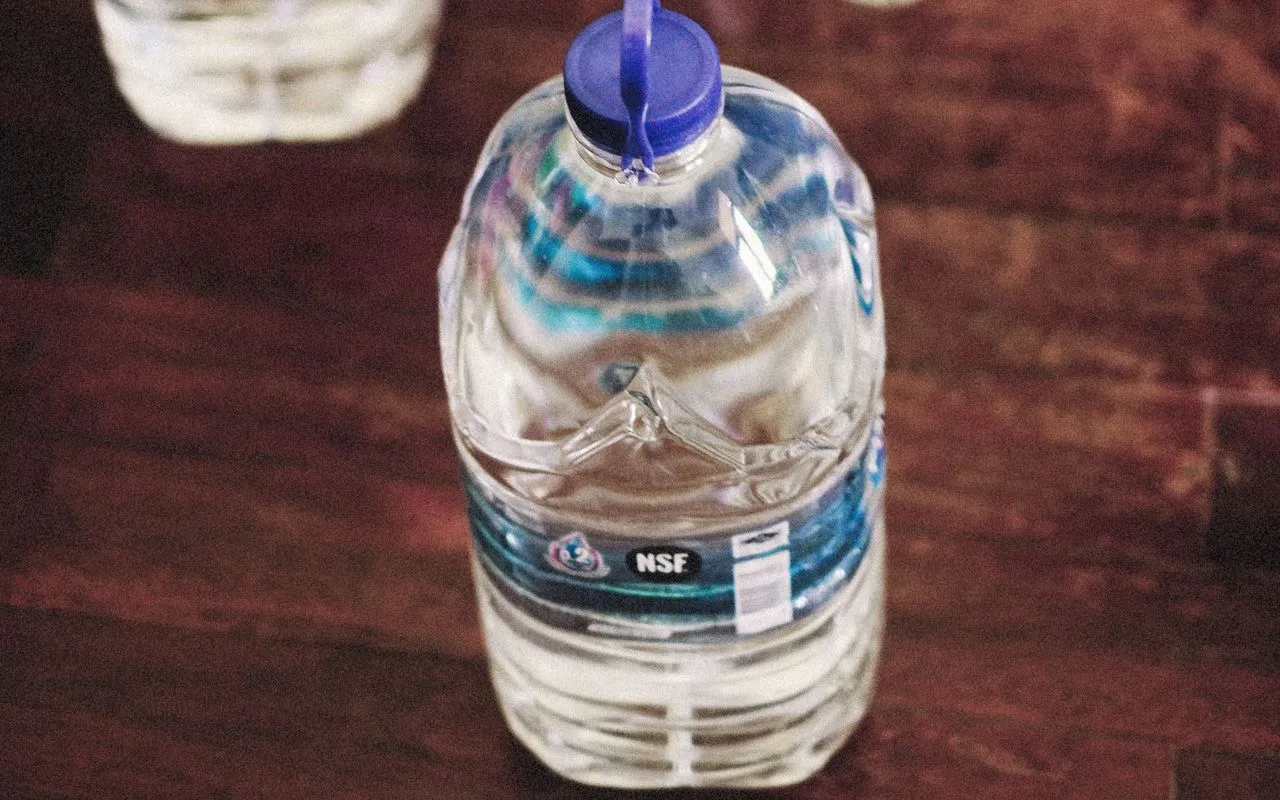
Before any filter earns a dollar of your budget, the boring layer comes first: stored water. Ready.gov’s baseline is one gallon per person per day for several days, covering drinking and sanitation, and FEMA’s longer-term guidance points toward a two-week supply at home. For my family of four, that’s a minimum of twelve gallons just to clear the three-day bar — sealed, dated, and rotated. It costs almost nothing and it works when you’re injured, exhausted, or standing in the dark, which no filter can claim.
A filter’s job is what comes after: stretching your plan past your storage, covering the outage that outlasts the math, and giving you options if you have to leave the house. That order matters. A household with twenty stored gallons and a $20 straw is better prepared than one with a $400 purifier and empty shelves.
How I ranked the best emergency water filters
Every product here got measured against the same yardstick, and criterion number one is the thread that runs through every water article on this site: third-party certification versus manufacturer claim. Any company can print “removes 99.99% of contaminants” on a box. A certification to an NSF/ANSI standard means an accredited body — NSF itself, or a lab like IAPMO R&T — verified the claim under a defined protocol and published the listing in a database you can search yourself. Independent lab testing sits in the middle: real evidence, but no ongoing audit behind it. A bare claim sits at the bottom.
After proof, I weighed the scenario fit (does it work without power? can it fill a pot?), capacity for a household rather than a solo hiker, honest running costs, and the patterns in thousands of verified owner reviews. Prices are ranges on purpose — they move, and the date at the bottom of this page tells you when I last checked.
| Product | Score | Highlight | Price range | Buy |
|---|---|---|---|---|
| Top pick AquaTru Classic Countertop RO Purifier | 9.0 | IAPMO-certified to 5 NSF/ANSI standards | around $350 to $480 | AquaTru |
| Big Berkey Gravity Water Filter | 7.3 | No-power gravity filtration, 2.25-gal tank | around $360 to $450 | Berkey |
| Sawyer Squeeze Water Filtration System | 8.9 | 0.1-micron filter, lifetime warranty, adapters included | around $30 to $46 | Sawyer |
| LifeStraw Peak Series Straw | 8.3 | Grab-and-sip backup, tested to EPA and NSF P231 protocols | around $20 to $25 | LifeStraw |
Best certified countertop filter: AquaTru Classic
The scenario: the emergency you’re already living with — aging municipal pipes, chlorine taste, the PFAS headlines that won’t stop coming.
The AquaTru Classic is a countertop reverse osmosis purifier, and it’s the only product on this page whose removal claims are certified, not just tested. IAPMO R&T certifies it to five standards — NSF/ANSI 42, 53, 58, 401, and P473 — which together cover taste and odor, health-critical contaminants like lead and arsenic, RO performance, emerging contaminants, and PFOA/PFOS. More than 80 certified claims in total, and the listing is searchable in IAPMO’s public database. Nobody has to take AquaTru’s word for anything.
The honest limits: it needs a 120-volt outlet, so it contributes exactly nothing during a blackout unless you can feed it from a battery station. The clean tank holds 0.75 gallon, so a family of four cycles it several times a day. And filters run roughly $60 in an ordinary year. That’s the cost of certified water while the grid is up — and “while the grid is up” is 99% of your family’s actual life.
I put it head-to-head with the Big Berkey in my AquaTru vs Berkey comparison if you’re deciding between the two.
Pros
- Removal claims certified by IAPMO to NSF/ANSI 42, 53, 58, 401 and P473 — you can verify the listing in a public database
- No plumbing or installation — sits on the counter and sets up in about ten minutes
- Filter changes are tool-free, and the machine tells you when each stage is due
Cons
- Needs a 120-volt outlet — when the grid goes down, so does your filtration
- Clean-water tank holds only 0.75 gallon, so a big family will be refilling constantly
- Ongoing filter costs of roughly $60 in a typical year, more when the RO membrane comes due
Best gravity water filter for grid-down: Big Berkey (with asterisks)
The scenario: day three of an outage, the stored water is running low, and the tap is either off or under a boil-water advisory.
Gravity filtration is the right architecture for this failure: no outlet, no pump, no moving parts. The Big Berkey holds 2.25 gallons, moves up to 3.5 gallons an hour with two Black Berkey elements, and its polished stainless body will outlast the kitchen it sits in. Fill it twice and you’ve covered a family of four’s drinking and cooking water for the day. On pure mechanics, it earns this slot.
Now the asterisks, because you deserve them plainly. Black Berkey elements have never been certified to any NSF/ANSI standard — the performance claims, including the 3,000-gallon element life, rest on the manufacturer’s own commissioned tests, which reviewers at Wirecutter and SimpleLab’s Tap Score found ran far shorter than what an NSF/ANSI 53 certification requires. Separately, EPA stop-sale orders in 2023 (a FIFRA registration dispute over the silver in the elements, not a safety recall) left supply and replacement-element pricing erratic, and the system can’t ship to California or Iowa at all. The litigation was still working through appeals as of this writing.
So why is it still here? Because the no-power gravity category is exactly where it delivers, the owner loyalty across years of reviews is real, and its certified competitors in this size class are thinner on capacity. But it wears a 7.3 on this site, not a 9 — the full accounting, EPA timeline included, is in the AquaTru vs Berkey breakdown. If unverified claims on your family’s water are a dealbreaker, that’s not paranoia; skip ahead to the Sawyer and run it as a gravity rig instead.
Pros
- Filters with zero electricity or plumbing — the right architecture for a grid-down scenario
- 2.25-gallon batches cover a family's daily drinking and cooking water
- Polished 304 stainless body is simple, repairable, and built to sit on a counter for decades
Cons
- Removal claims rest on the manufacturer's own short-duration lab tests, not NSF/ANSI certification
- EPA stop-sale orders (2023) and ongoing litigation have made supply, pricing, and support unpredictable
- Cannot be shipped to California or Iowa, and the maker's own site lists it as limited supply
Best portable water filter for a go-bag: Sawyer Squeeze
The scenario: you’re leaving the house — evacuation, a stay with relatives, a shelter — and the water where you land is questionable.
The Sawyer Squeeze (SP129) is the portable pick because it’s the only filter in its weight class that serves a household instead of one drinker. The 0.1-micron hollow fiber membrane — finer than LifeStraw’s 0.2 — carries removal rates Sawyer backs with a published third-party microbiological report: 99.99999% of bacteria, 99.9999% of protozoa, 100% of microplastics. Independent testers clock it around 1.5 to 1.7 liters per minute, and the kit converts four ways out of one $40-ish box: squeeze pouch, gravity rig, inline on a hydration pack, or threaded onto any standard 28 mm bottle.
The one that matters for families: it fills containers. Pots for cooking, bottles for kids, a basin for washing — one adult can produce water for four people in minutes. It asks for stewardship in return (backflush it, replace the flimsy stock pouches eventually), and it shares the hollow-fiber Achilles’ heel I detail below: one hard freeze after first use can silently ruin it, and Sawyer’s lifetime warranty explicitly excludes that. The complete head-to-head, freeze rules included, is in my Sawyer Squeeze vs LifeStraw comparison.
Pros
- Finer 0.1-micron membrane than LifeStraw's 0.2, with removal rates Sawyer backs with a published third-party microbiological report
- Works four ways out of the box — squeeze pouch, gravity rig, inline on a hydration pack, or threaded onto a standard 28 mm bottle
- Actually fills containers, so one filter can make cooking and washing water for a whole family, not just one drinker
- Lifetime limited warranty on the filter itself
Cons
- One freeze after first use can silently ruin the fibers — there is no way to test for it at home, and Sawyer's warranty explicitly excludes frozen filters
- The included squeeze pouches are the weak link; owner reviews consistently report seams splitting long before the filter wears out
- Flow drops without regular backflushing, so the cleaning plunger is part of the kit for a reason
Best ultralight backup filter: LifeStraw Peak Series Straw
The scenario: the emergency that catches you away from every plan you made — stranded in a car, stuck at work, a kid’s bag on a school trip.
The LifeStraw Peak straw is 2.3 ounces, around twenty dollars, and asks absolutely nothing of you: unlimited shelf life until first use, no maintenance, no moving parts. Its 0.2-micron membrane is independently lab-tested to the US EPA guide standard and NSF P231 protocols — testing, not certification, and I weigh it accordingly — with published removal rates of 99.999999% for bacteria and 99.999% for parasites. The Peak redesign added 28 mm bottle threads, so it’s no longer only a face-down-in-the-creek tool.
Its limit is its shape. A bare straw delivers water at the speed one person can sip and only into that person’s mouth — it will never fill a pot or a toddler’s cup, which is why it ranks as the backup layer and not the primary. Buy it in multiples: one per glovebox, one per go-bag, one in the desk drawer. Sealed, they keep indefinitely. That’s the whole pitch, and it’s a good one.
Pros
- Cheap and light enough to stash one per glovebox, go-bag, and desk drawer without thinking about it
- Zero moving parts and unlimited shelf life before first use — ideal buy-and-forget insurance
- Peak redesign adds 28 mm bottle threads and gravity-hose compatibility the classic straw never had
- Removal rates independently lab-tested to US EPA guide standard and NSF P231 protocols
Cons
- Delivers water only while someone sips — you cannot fill a pot, a bottle, or a toddler's cup with the bare straw
- 0.2-micron membrane is coarser than Sawyer's 0.1, and the 4,000-liter rated life is a fraction of what a maintained Squeeze delivers
- Same silent freeze vulnerability as every hollow fiber filter, with a shorter 3-year warranty behind it
The freeze rule and the free layer
Two things every plan should absorb, no purchase required.
The freeze rule. The Sawyer and the LifeStraw both use hollow fiber membranes, and once a filter has been wet, residual water inside the fibers can freeze, expand, and crack them — invisibly, with no home test to catch it. Both manufacturers treat a frozen used filter as a dead filter. So: filters that ride in vehicles stay sealed and unused, and any filter that’s ever seen water lives indoors. Mine sit on the ready-room shelf and get counted in the Sunday shelf-life audit like everything else.
The free layer. If water is microbiologically suspect and you have heat, a rolling boil (about one minute, per CDC guidance) kills bacteria, viruses, and parasites — viruses being the one thing none of the microfilters above can catch. Boiling removes no lead, chemicals, or sediment, and it costs fuel and time, but as a redundancy layer behind your storage and your filters, the price is right. Preparedness is insurance, not fear — and layered insurance is the kind that pays out.
Which water filter should you buy first?
Start with storage, not a filter — Ready.gov’s gallon per person per day, times your household, times at least three days. It outranks everything below.
Buy the AquaTru Classic first if your budget starts at home and your real, daily risk is tap water quality. Certified performance you drink every day beats emergency gear you touch once a year. Skip it if your grid is shaky and a battery station isn’t in the cards — it’s wall-power only.
Buy the Big Berkey if long outages are your planning scenario and you’ve read the asterisks with clear eyes. Skip it if uncertified claims bother you (reasonable), or if you live in California or Iowa, where it won’t ship.
Buy the Sawyer Squeeze if you’re building go-bags or want the cheapest way to give a whole family filtered water anywhere. At this price, honestly, buy it even if you bought something above — it’s the best $40 redundancy in water preparedness.
Buy LifeStraw Peaks in multiples if you want set-and-forget insurance scattered where you might actually get stranded. Skip the straw as your only filter — it can’t serve a household, and it was never meant to.
The pattern you’ve probably noticed: these aren’t four competitors. They’re four layers, and the families I’d call genuinely water-ready hold storage plus two of them. Start at the top of this list, work down as budget allows, and label everything with the purchase date. Clean water is the cheapest insurance in the whole plan.
Prices checked on 7/3/2026 and subject to change. Confirm the current price at the store.
Frequently asked questions
What is the best water filter for emergencies?
It depends on the failure you are planning for. For everyday certified filtration, the AquaTru Classic (IAPMO-certified to five NSF/ANSI standards) leads. For power outages, a gravity filter works with no electricity. For evacuation, the Sawyer Squeeze fills pots and bottles. Most households end up layering two or three.
How much water should I store for an emergency?
Ready.gov recommends at least one gallon per person per day for several days, covering drinking and sanitation, and suggests working toward a two-week supply at home. Children, nursing mothers, sick family members, hot climates, and pets all push the number higher. Storage comes before any filter purchase.
Do I need a water filter if I store water?
Yes, once your storage is squared away. Stored water is finite and outages are not polite about schedules — a filter is what stretches your plan past day three or four. Think of storage as the primary layer and filtration as the insurance behind it, not a replacement for it.
Are any emergency water filters NSF certified?
Among the filters here, only the AquaTru Classic holds a certification — IAPMO R&T certifies it to NSF/ANSI 42, 53, 58, 401, and P473. Sawyer and LifeStraw publish independent lab testing to EPA and NSF protocols, which is weaker proof than certification. Berkey's claims rest on its own commissioned tests.
Can one water filter cover my whole emergency plan?
Not well. A certified countertop purifier dies with the power grid, a gravity filter is too heavy to evacuate with, and a straw filter cannot fill a cooking pot. Each covers a different failure, which is why a layered setup — storage, home filter, portable filter — beats any single purchase.
Is boiling water better than filtering it in an emergency?
Boiling is the most reliable way to kill bacteria, viruses, and parasites, and CDC guidance treats it as the gold standard when water is microbiologically suspect. But it needs fuel, time, and cooling, and it removes no lead, chemicals, or sediment. Treat boiling as a free extra layer, not a replacement.