Go Bag vs Bug Out Bag: The Real Difference (No Bunker)
This article contains affiliate links: if you buy through them, we earn a small commission at no extra cost to you. It never changes our verdict — our research method is public. See how we research
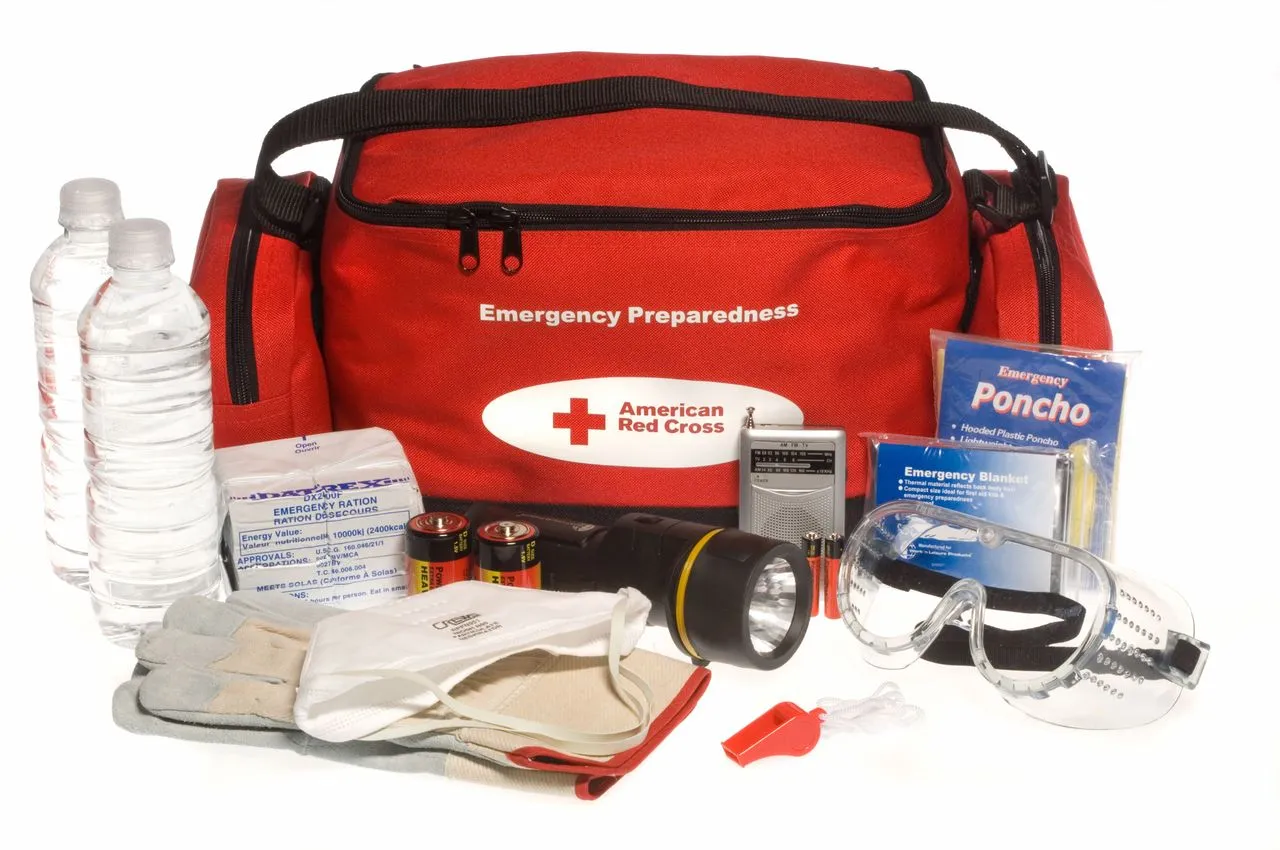
Somewhere along the way, “go bag” and “bug out bag” started getting used like synonyms, and the mix-up isn’t harmless. It’s why so many first kits turn into forty-pound fantasy packs that nobody in the household can actually carry down three flights of stairs.
So let’s untangle it, because the short version is genuinely short. A go bag is an evacuation kit: about 72 hours of essentials, built to get you out the door in minutes and carry you somewhere that still has running water — a shelter, a hotel, your sister’s guest room. A bug out bag is a survival kit: gear for living without those services, packed by people who assume nobody is coming. Same shape, different philosophy.
Most families need the first. A much smaller group needs the second. Here’s what the official checklists actually say belongs in each, where the terms came from, and where I’d put your first hundred dollars.
What is a go bag?
The cleanest official definition I’ve found comes from NYC Emergency Management, which asks every household member to keep a Go Bag — their capitalization, not mine — packed in a sturdy, easy-to-carry container near the door or the bed. Their list is telling in what it prioritizes: copies of important documents (IDs, insurance, banking records) in waterproof bags, current medications, a flashlight, batteries, and a portable phone charger. Paperwork before paracord.
Ready.gov uses the same term on its evacuation page: build a go-bag with the essentials, then make sure everyone in the household knows where it’s stored and who grabs it. The Red Cross frames the supply math for evacuation as a three-day kit — one gallon of water per person per day, plus non-perishable, easy-to-prepare food — in a pack that’s actually easy to transport. That three-day window is why you’ll also hear “72-hour kit,” which is the same object wearing a different name tag.
Notice what every one of those agencies quietly assumes: you have a destination. You’re not walking into wilderness. You’re driving to your cousin’s place, or checking into a shelter, while the fire department or the utility crew does its job. The go bag’s whole purpose is to make the leaving fast and the first three days away from home boring instead of desperate.
And the events that trigger one are ordinary, not cinematic: the neighbor’s kitchen fire that empties your building at 2 a.m., a chemical spill on the interstate, a flood evacuation order, a gas leak on your street. Plan for the Tuesday, not the apocalypse.
What is a bug out bag?
The term is military hand-me-down. “Bug out” shows up in World War II slang and got famous during the Korean War, where it meant a fast, unplanned retreat — Historynet and Wiktionary both trace the phrase to that era, with “bug out bag” following as a specific piece of kit in the late 1950s. You’ll also run into GOOD bag — “Get Out Of Dodge” — which is the same idea in a louder shirt.
That lineage explains the contents. A bug out bag assumes no destination and no resupply: you’re carrying shelter (a tarp or emergency bivvy), fire-starting gear, water filtration, calorie-dense food, navigation, and tools, because the plan is to be your own infrastructure for somewhere between three days and a week. It’s the kit for leaving civilization, not for leaving your zip code.
I want to be fair here, because the internet mostly isn’t. There are people for whom this is a rational kit: households whose realistic evacuation includes a long, unsupported stretch — remote rural properties, wildfire country with one road out, places where “the next town” is a tank of gas away. If a wildfire can close your only route and park you on a shoulder overnight, some survival margin in the trunk is just math.
But for a suburban or apartment household, a bug out bag solves a problem you probably don’t have, and its weight actively works against the problem you do have — which is getting the kids, the dog, and your documents into the car in under five minutes.
Go bag vs bug out bag: side by side
| Go bag | Bug out bag | |
|---|---|---|
| Purpose | Evacuate to a place with services (shelter, hotel, family) | Survive without services entirely |
| Time horizon | About 72 hours | 72 hours to a week or more |
| Weight | As light as you can make it — think loaded school backpack | Heavy; shelter, filtration, and food add up fast |
| Where it lives | Hook by the door, or by the bed | Vehicle trunk, garage, mudroom |
| Core assumption | Roads open, destination exists, help is working | No destination, no resupply, no help coming |
| Official backing | Ready.gov, Red Cross, NYC Emergency Management | Community practice — no agency publishes one |
That last row deserves a beat. Every emergency management agency I can find publishes a go bag or 72-hour kit checklist. None of them publishes a bug out bag list. That’s not proof the concept is useless — agencies plan for likely events, not edge cases — but it tells you which kit is the foundation and which is the elective.
What actually belongs in each
For the go bag, I’m not going to freelance. Ready.gov’s build-a-kit list, the Red Cross checklist, and NYC Emergency Management’s Go Bag guidance overlap almost completely, and the consensus core looks like this:
- Documents: copies of IDs, insurance policies, and bank records in a waterproof pouch. Boring, weightless, and the thing evacuees most wish they’d grabbed.
- Prescription meds you already take, plus a spare pair of glasses if you wear them.
- Cash in small bills. Card readers ride the same grid as everything else.
- Water and food: the Red Cross math is a gallon per person per day for three days, with easy-prep food. Honest note — a true three-day gallon count is un-carryable. Bottles go in the bag; the gallons live in your car or at home.
- Light and signal: flashlight, extra batteries, whistle.
- Phone chargers and a backup battery, per Ready.gov.
- A battery or hand-crank radio — NOAA weather radio if you can, also straight off the Ready.gov list.
- First aid kit, moist towelettes, garbage bags, a change of clothes per person.
- The dependents’ rows: infant formula and diapers if that’s your season of life, and food plus water for the pet who will absolutely be coming.
- Local paper maps, because the day you evacuate is a bad day to have 4% battery.
A bug out bag starts from that base and adds self-sufficiency. Water filtration is the signature item — a compact filter like the Sawyer Squeeze or the LifeStraw Peak runs in the $25 to $45 range and weighs a few ounces; I compared the two head to head in my sawyer squeeze vs lifestraw breakdown, and the wider field lives in my best water filter for emergency preparedness guide. Food shifts from granola bars to dense, just-add-water calories — a Mountain House 3-day supply pouch set is the standard reference point, usually under $100. Then come the survival layers: tarp or bivvy, fire starting, a multi-tool, navigation you can run without a signal.
Would I skip the filter in a pure go bag? For most people, yes — you’re evacuating toward working plumbing. But I’ll concede it’s the one bug-out item cheap and light enough that tossing it in costs you almost nothing. The tarp does not get the same pass.
The apartment version
If you’re in an apartment, the go bag concept gets simpler and stricter at the same time. Simpler, because you’re almost certainly evacuating toward services — cities are dense with shelters, hotels, and friends. Stricter, because your exit is a stairwell. Elevators go out in exactly the situations that empty a building, so every pound you pack is a pound you’re carrying down, possibly with a kid on one hip.
The apartment rules I’d hold to: one bag per adult, not one family duffel nobody can lift. Kids old enough to walk get a small bag of their own — comfort item, water bottle, snack, done. The bag hangs on a hook by the door, visible, not entombed under winter coats. And your documents pouch adds two renter-specific items: a copy of your lease and your renter’s insurance details, because post-evacuation, those two papers do more work than any gadget in the bag.
I walk through the full small-space setup — including where the water and two-week pantry live when you have zero garage — in my emergency preparedness checklist for apartments.
What you can skip
This is where I save you real money, because the go-bag aisle is heavily salted with bug-out gear wearing a safety halo.
Skip the tacticool tax. MOLLE webbing, camouflage anything, fixed-blade knives, ferro rods, “tactical” pens. For a person walking into a Red Cross shelter, none of it earns its weight, and some of it earns you a conversation with shelter security.
Skip the exotic threats. Gas masks and CBRN filters are a different problem, a different budget, and a different article. They have no seat in a 72-hour evacuation bag.
Skip duplicating your pantry. The two-week food supply belongs at home, where weight is free — that’s a shelving problem, and I’ve covered it in best long term food storage for a family of 4. The go bag carries three days, thin and light, and that’s it.
Skip the second of anything. Two flashlights, two multi-tools, two radios — every duplicate is a slower trip down the stairs. One of each, batteries checked twice a year, beats redundancy you can’t carry.
Who needs which — and who can skip both
Build a go bag if you’re nearly anyone. Flood zone, wildfire smoke season, a rail line or industrial park within a mile, a building full of neighbors who love candles — the trigger list is long and mundane. Mine hangs in the coat closet because I live where the tornado sirens get tested every Wednesday, but the bag itself is built for a gas leak, not a twister. The scenario is “out the door in five minutes,” whatever knocks.
Add a bug out bag if your geography demands it. Long unsupported evacuation routes, one road out, real distance between you and the next set of services. If that’s your map, the survival additions are rational — start with water filtration and dense food, and skip the cosplay layer.
And who can skip both? Honestly, almost nobody skips the go bag — but there’s a legitimate minimalist floor. If you’re low-mobility, or your realistic plan for every local hazard is sheltering in place, your “go bag” can be a waterproof folder of documents, your meds, a charger, and cash, sitting in one known drawer. That single drawer puts you ahead of most of the country, and you can build it tonight for the cost of a folder.
Start there. The backpack can come next payday.
Cover photo: FEMA / American Red Cross emergency “ready to go” kit, via Wikimedia Commons — public domain (US federal government work).
Frequently asked questions
Is a go bag the same as a 72-hour kit?
Functionally, yes. "Go bag," "72-hour kit," and "evacuation bag" all describe a pre-packed bag covering roughly three days of essentials while you get somewhere safer. The label varies by region — emergency managers tend to say go bag, preparedness communities say 72-hour kit — but the checklists underneath are nearly identical.
Do I need both a go bag and a bug out bag?
Most households don't. A go bag covers evacuation to a shelter, hotel, or relative's house, which is the realistic scenario in the vast majority of emergencies. A bug out bag earns its place mainly when your evacuation route includes a long stretch with no services — rural areas, single-road wildfire corridors, that kind of geography.
How heavy should a go bag be?
Light enough to carry down several flights of stairs at a brisk pace without stopping — for most adults, that means a loaded school backpack, not a hiking pack. If you're debating an item, weight wins. The full official water recommendation belongs in your car or home storage, not on your shoulder.
Where should you keep your go bag?
NYC Emergency Management suggests keeping it near your door or your bed, and that advice holds anywhere. A coat-closet hook by the exit works; the back of a storage unit doesn't. Every adult in the household should know exactly where the bag lives and who is responsible for grabbing it.
What does GOOD bag stand for?
GOOD stands for "Get Out Of Dodge" — one more name for the same family of grab-and-leave kits. It leans toward the bug out end of the spectrum, implying a fast exit from a collapsing situation rather than a managed evacuation. These days you'll mostly see the term in older preparedness forums.
What should go in a go bag for an apartment?
The same core as any go bag — copies of documents, prescription meds, cash, chargers, flashlight, a change of clothes — but packed lighter, because elevators go out exactly when you need them most. Add your lease and renter's insurance details, and keep the bag reachable in seconds, not buried in a closet.