MIRA Safety CM-6M Review: A Specs Breakdown
This article contains affiliate links: if you buy through them, we earn a small commission at no extra cost to you. It never changes our verdict — our research method is public. See how we research
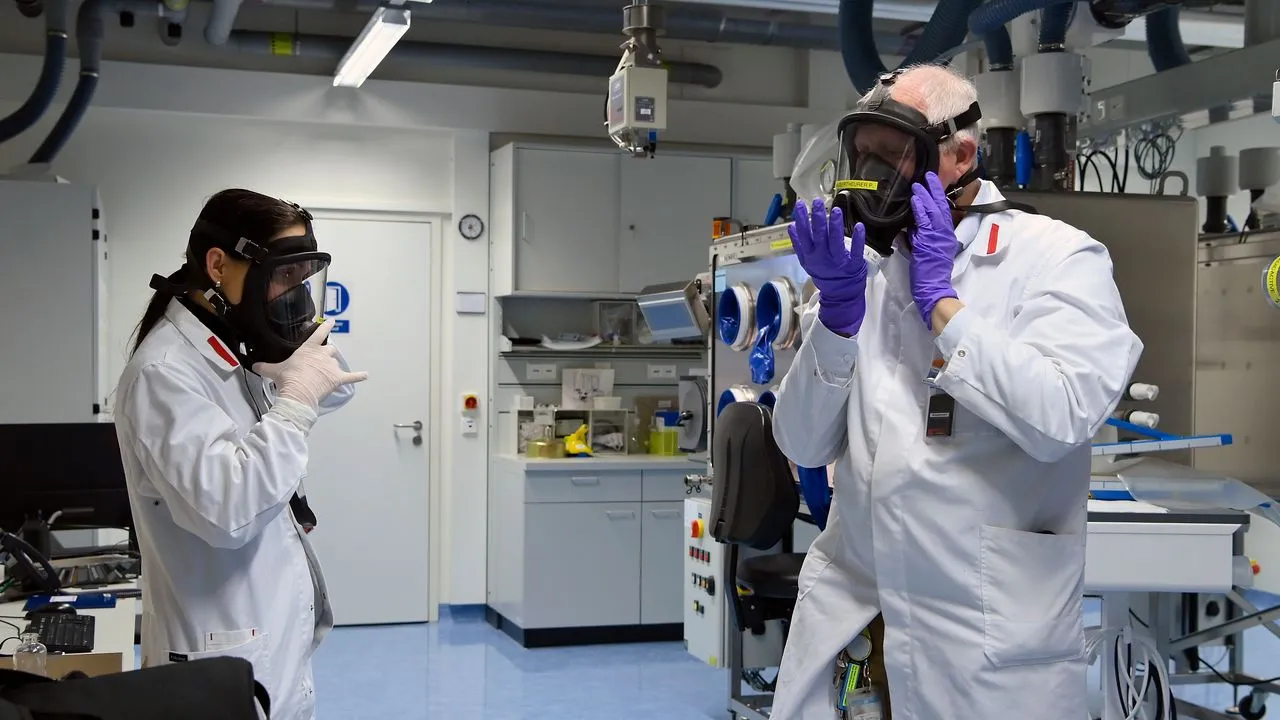
Let me say the honest part first: I have never worn a MIRA Safety CM-6M in a contaminated environment, and neither have most of the people reviewing it online. Nobody sane stages that test. Which is exactly why this product, more than anything else I cover, has to be judged on paper — the certifications, the standards documents, the manufacturer’s own technical data, and the reports of people who own and train with one. That’s the review I can actually write for you, and with a $250-plus mask, the paper trail happens to be the most useful part anyway.
Research-driven, not staged — specs verified, certifications checked, recalls tracked, thousands of real owner reviews cross-referenced.
One framing note before the specs. A gas mask sits in the same mental drawer as a fire extinguisher or a term life policy: you buy it methodically, you store it correctly, and you genuinely hope it stays a line item on a spreadsheet forever. People who live near rail corridors, chemical plants, or refineries buy these after watching an industrial accident play out on the news a few counties over. That’s insurance thinking, and it’s the only frame I’ll use here. What any mask can or can’t do for you in a specific emergency is a question for your local emergency management office — not for a review site, mine included.
What the CM-6M Is — and Who Actually Makes It
The CM-6M is a full-face respirator built around a single panoramic polycarbonate visor, a bromobutyl rubber facepiece, and a six-point rubber-textile harness. It weighs 560 grams — about a pound and a quarter — and it’s rated by the manufacturer for use from −30 °C to +70 °C.
Here’s the part the product page soft-pedals: MIRA Safety doesn’t manufacture it. The mask is made by Gumárny Zubří, a rubber manufacturer in the Czech town of Zubří that has been producing protective masks for decades, including for the Czech Ministry of the Interior. In Gumárny Zubří’s own catalog, this is the CM-6 family: the base CM-6, and the CM-6M variant that adds a high-flow drinking system. MIRA Safety is the US-facing distributor and brand. That’s not a knock — it’s genuinely good news. You’re not buying a startup’s first mold; you’re buying a mature product from a factory whose main customers are government procurement offices, sold with US-based support.
The EN 136 Class 3 Certificate Is the Receipt
A spec sheet is a promise. A certification is the receipt — and this is the section that justifies the price tag, so I’m going to be specific.
The CM-6 platform is certified to EN 136:1998, Class 3, the European standard for full-face respiratory masks. EN 136 defines three classes; Class 3 is the most demanding, the tier specified for heavy-duty professional use, with the toughest requirements for the facepiece’s strength and durability. The certificate wasn’t self-issued, either. Gumárny Zubří’s documentation names the certifier: the Research Institute of Occupational Safety in Prague, notified body 1024, working under the EU’s PPE Regulation 2016/425, Module B. A notified body is an independent lab that a European government has formally designated to test products against the standard — the EU’s rough equivalent of how NIOSH approval works here. That’s a receipt you can trace, not a badge the marketing team drew.
The manufacturer’s technical data sheet also shows the mask clearing EN 136’s bars with room to spare, which I always like to see. Effective field of view is 77 percent against a required minimum of 70; binocular field of view is 84 percent against a minimum of 80. Inhalation resistance measures 30 pascals at a 30-liter-per-minute breathing rate, where the standard allows up to 50. Speech intelligibility through the membrane diaphragm is rated at 95 percent minimum — you can be understood without shouting, which matters more in practice than any spec on the sheet.
Two honest caveats. First, the certification applies to the Czech-made model; MIRA Safety states plainly that its newer US-assembled version has not yet received NIOSH or CE certification, so if you order, make sure you’re getting the CZ-production mask. Second, none of this is a NIOSH approval, which is what US workplace respiratory programs legally require. For a household insurance purchase that distinction is mostly academic. For anything job-related, it isn’t — buy NIOSH-approved gear instead.
40mm NATO Filters and the NBC-77 SOF
A mask is only half the purchase, because the CM-6M ships without filters. What you’re really buying is the connection standard: two ports threaded Rd 40 x 1/7 inch per EN 148-1 — the 40mm NATO standard. Any compliant 40mm filter from any manufacturer screws in, on the left side, the right side, or both at once. No proprietary lock-in, and that’s worth real money over a 20-year ownership window.
The filter MIRA Safety pairs with it is the NBC-77 SOF — and a small housekeeping note, because I see it miswritten constantly (I typed “SF” myself for a week): the official name is NBC-77 SOF. It’s a Czech-made combination filter certified to EN 14387:2004 with its A1:2008 amendment, carrying the rating A2B2E2K2HgSX P3 D R. Decoded, that string covers the standard’s classes for organic vapors, inorganic gases, acid gases, ammonia, and mercury vapor, plus a P3 particulate stage — the highest particle class in the European system, and MIRA publishes test results above 99.99 percent where the standard requires 99.95. If those letters and numbers still look like soup, I break down exactly what each one means — and how EN 14387 differs from a NIOSH CBRN certification — in 40mm gas mask filter ratings explained.
The headline spec, though, is the shelf life: 20 years factory sealed, stored between −5 °C and +30 °C at under 80 percent humidity. I explain why filters age at all — and how to read the date on yours — in do gas mask filters expire. That number is what turns this kit from a recurring subscription into a genuine buy-once line item, and it’s why I gave the filter its own card below. Two cautions from the fine print. The 20 years applies to a sealed filter — once opened, you’re on the short in-use clock. And at roughly $80 each, a realistic two-adult setup (one mask and one sealed spare filter per person) lands the total budget in the $650 to $750 range. Price it honestly before you start.
Fit, Field of View, and the One-Size Problem
Now the catch I’d underline twice: the CM-6M comes in one universal size. Gumárny Zubří says it fits all adult faces “except the extremely small faces,” and the aggregated owner feedback backs that up — average and large heads report an easy, comfortable seal, while small-faced adults are the recurring complaint thread. A respirator that doesn’t seal is an expensive piece of shelf decor. If you can’t pressure-test the fit in person, buy from somewhere with a clean return policy and check the seal the day the box arrives, not the day you need it.
Living-with-it details, from the spec sheet and owner reports together: the inner nosecup routes your exhaled air away from the visor, and fogging complaints are genuinely rare — the panoramic visor plus that 77 percent effective field of view is the single most-praised trait in owner reviews. The drinking system connects to the included 900 ml canteen and, with MIRA’s Type M adapter, to a CamelBak-style bladder; owners describe the flow as slow but functional. Glasses wearers need the MIRAVISION spectacle insert, because regular temple arms break the face seal. And one practical point I’ll frame strictly as a fit issue: a mask you’ve never once put on is a mask you don’t actually own. Practice the donning steps until the harness adjustment is boring. That’s not tactical training; that’s the same logic as knowing where your circuit breaker is.
Storage is a genuine strength. The mask’s own storage and service life is 20 years from production date, with the manufacturer recommending a valve inspection and leak test every five years — a task that slots neatly into anyone’s twice-a-decade gear audit. Mine goes on the same Sunday spreadsheet as the pantry rotation.
CM-6M vs CM-7M: When the Sibling Makes More Sense
MIRA’s catalog will inevitably show you the CM-7M, the military-pattern sibling, and the short version is: most households reading this don’t need it. The CM-7M costs more — roughly $300 to $350 against the CM-6M’s $250 to $300 — and its design trades away peripheral vision for a recessed twin-visor layout built around shouldering optics, which is a requirement I hope none of my readers have. It earns its place in exactly one civilian case: it comes in three sizes. If the CM-6M’s universal fit fails your face, the CM-7M in size small is the same certified Czech platform, the same 40mm NATO threads, in a shell that can actually seal on you. That’s the whole comparison; I’m not going to pad it into a versus article.
What Aggregated Owner Reviews Actually Say
Cross-checking retailer reviews, forum threads, and the hands-on write-ups (Pew Pew Tactical’s staff review is the most thorough I found), the pattern is unusually consistent for this category. Praise clusters around three things: the visibility, the comfort of the six-point harness over multi-hour wear, and build quality that owners describe as obviously factory-mature rather than boutique. Complaints cluster around three things too: the one-size fit on smaller faces, the fiddly drinking-tube routing, and — the one I’d plan around — filter availability, since 40mm filters across every brand have a history of selling out during news-driven demand spikes. None of the complaint patterns contradict the spec sheet. That agreement between paper and owners is roughly what an 8.7 looks like in my system.
Pros
- EN 136 Class 3 certificate issued by notified body 1024 in Prague — a public, verifiable receipt, not a marketing claim
- Two Rd 40x1/7" ports accept any EN 148-1 (40mm NATO) filter, mounted left, right, or both sides
- 20-year storage life, integrated drinking system, and a wider certified field of view than the standard requires
Cons
- One size only — adults with small faces may not get a reliable seal, and there is no smaller option
- No NIOSH approval; the certification is European (CE), and the US-assembled version carries no certification at all yet
- Filters are sold separately, so the real per-adult cost is the mask plus about $80 per sealed NBC-77 SOF
Who the CM-6M Is For — and Who Should Skip It
Buy the CM-6M if you’ve decided a certified full-face respirator belongs in your household’s insurance drawer — you live near industrial or rail infrastructure, you want European Class 3 certification you can verify rather than take on faith, and you want the purchase to be done for twenty years. One mask and one sealed NBC-77 SOF per adult, logged with the purchase date, checked on your five-year audit. Methodical, boring, finished — the way I verify every product I cover, same as the certification-first logic I apply to water filters.
Skip it if your face runs small — get fitted for the three-size CM-7M instead — or if you need NIOSH approval for any workplace purpose, which this European certificate doesn’t satisfy. And skip it entirely if the budget for it would crowd out water storage, food rotation, or a weather radio. A gas mask is a deep line on the preparedness spreadsheet, not the first one — water, food, and a working weather radio earn their rows first.
Prices checked on 7/3/2026 and subject to change. Confirm the current price at the store.
Frequently asked questions
Is the MIRA Safety CM-6M NIOSH approved?
No. The CM-6M carries a European certification — EN 136:1998 Class 3, CE-marked through notified body 1024 in Prague — not a NIOSH approval. MIRA Safety also notes its US-assembled version has no NIOSH or CE certification yet. For US workplace respiratory compliance, employers still need NIOSH-approved equipment.
What filters fit the MIRA CM-6M?
Any filter with the Rd 40 x 1/7-inch thread defined by EN 148-1 — the 40mm NATO standard. The mask has two ports, so a filter can mount on the left, the right, or both sides. MIRA Safety pairs it with the NBC-77 SOF, but no proprietary filter is required.
How long does the CM-6M last in storage?
Gumárny Zubří, the manufacturer, states a 20-year storage and service life from the production date when storage rules are followed, and recommends inspecting the valves and running a leak-tightness test every five years. The warranty is five years in storage, then 24 months once the original package is opened.
Does the MIRA CM-6M come in different sizes?
No — it ships in one universal size. The manufacturer says that fits all adult faces except extremely small ones, which is precisely the catch. If your face runs small, look at the CM-7M, which shares the same core parts and filters but comes in three sizes.
Who actually makes the CM-6M gas mask?
Gumárny Zubří, a Czech rubber manufacturer that has been making protective masks in the town of Zubří for decades and supplies the Czech Ministry of the Interior, among others. The CM-6M is its CM-6 mask fitted with a high-flow drinking system. MIRA Safety is the US-facing distributor and brand.
Can you wear glasses under the CM-6M?
Not regular glasses — the temple arms cross the sealing edge and break the fit, which defeats the point of a full-face mask. MIRA Safety sells a spectacle insert kit, MIRAVISION, that mounts a prescription frame inside the mask for the CM-6M, CM-7M, and CM-8M.