Do Gas Mask Filters Expire? Shelf Life, Dates, and Storage
This article contains affiliate links: if you buy through them, we earn a small commission at no extra cost to you. It never changes our verdict — our research method is public. See how we research
Here’s the short answer, because you deserve it up front: yes, gas mask filters expire — even sealed in the box, even stored perfectly. Most civilian 40mm and twin-cartridge filters are rated for about five years from manufacture. Military-grade CBRN filters stretch that to 15 or 20. And the date stamped on the canister isn’t a suggestion the way the date on a can of beans sometimes is. It’s a chemistry deadline.
That five-word answer raises better questions, though. Why does a sealed metal can of charcoal go bad on a shelf? How do you read the date? And what about that $12 olive-drab surplus filter on eBay that “still smells fine”? I’ve spent a lot of hours in filter spec sheets and European certification documents sorting this out, so let me walk you through it the way I’d explain it to a neighbor — no bunker talk required.
Why gas mask filters expire in the first place
A modern filter is really two filters stacked together. There’s a particulate layer — dense pleated media that traps smoke, dust, and aerosols — and a bed of activated carbon that adsorbs gases and vapors. Both age, but the carbon is the diva of the pair.
Activated carbon works because it’s absurdly porous. A few tablespoons hide a surface area the size of a football field, and toxic molecules stick to that surface as air passes through. The catch: the carbon can’t tell the difference between tear gas and ordinary humidity. From the day it’s made, it grabs whatever molecules reach it — and water vapor is always, always reaching. Every pore that fills with moisture is capacity you don’t get back. Factory sealing slows this to a crawl; it doesn’t stop it. On top of that, military and CBRN carbons are impregnated with metal-salt catalysts that handle specific threats, and those treatments slowly lose reactivity with age.
Then there’s the boring failure mode nobody talks about: rubber. The gaskets that seal the filter to your mask harden and shrink over the decades. A filter with perfect carbon and a leaky gasket protects you from exactly nothing, because contaminated air follows the easy path around the filter, not through it.
So an expired filter usually still breathes fine. That’s what makes it sneaky. Airflow tells you nothing about how much adsorption capacity is left — and there’s no home test for that.
How to read the date on a gas mask filter
Flip the filter over and check the label or the stamped metal rim. You’re looking for up to three things: a manufacture date, an expiration date (often “use by” or an hourglass symbol), and a lot number. Some makers print only the manufacture date and publish the shelf life separately, so you may need the spec sheet to do the math. If nothing is legible — corroded stamp, missing label, mystery can — treat it as expired. No date is not a loophole; it’s a verdict.
While you’re reading, decode the certification line, because it tells you what the filter was actually tested to do. The European standard for gas and combination filters is EN 14387, and its letter code is refreshingly logical. A = organic gases and vapors, B = inorganic gases, E = acid gases like sulfur dioxide, K = ammonia. The digit after each letter is capacity class, 1 through 3. P3 is the highest particulate class — the EN 14387 test requires at least 99.95% filtration efficiency. So a marking like A2B2E2K2 P3 reads as: medium-capacity protection across all four gas families, plus top-class particulate filtration. Extra letters cover specifics — Hg for mercury vapor, R for reusable, D for passing the dolomite dust-clogging test.
A spec sheet is a promise. A certification is the receipt. A filter with a current date and a full EN 14387 marking has both. A filter with neither — whatever the seller swears about how it was stored — has told you everything you need to know.
Gas mask filter shelf life by type
Here’s how the categories shake out, sealed in original packaging and stored properly:
- Disposable particulate respirators (N95 / FFP2-FFP3): about 5 years. The electrostatic charge in the media fades and the straps age.
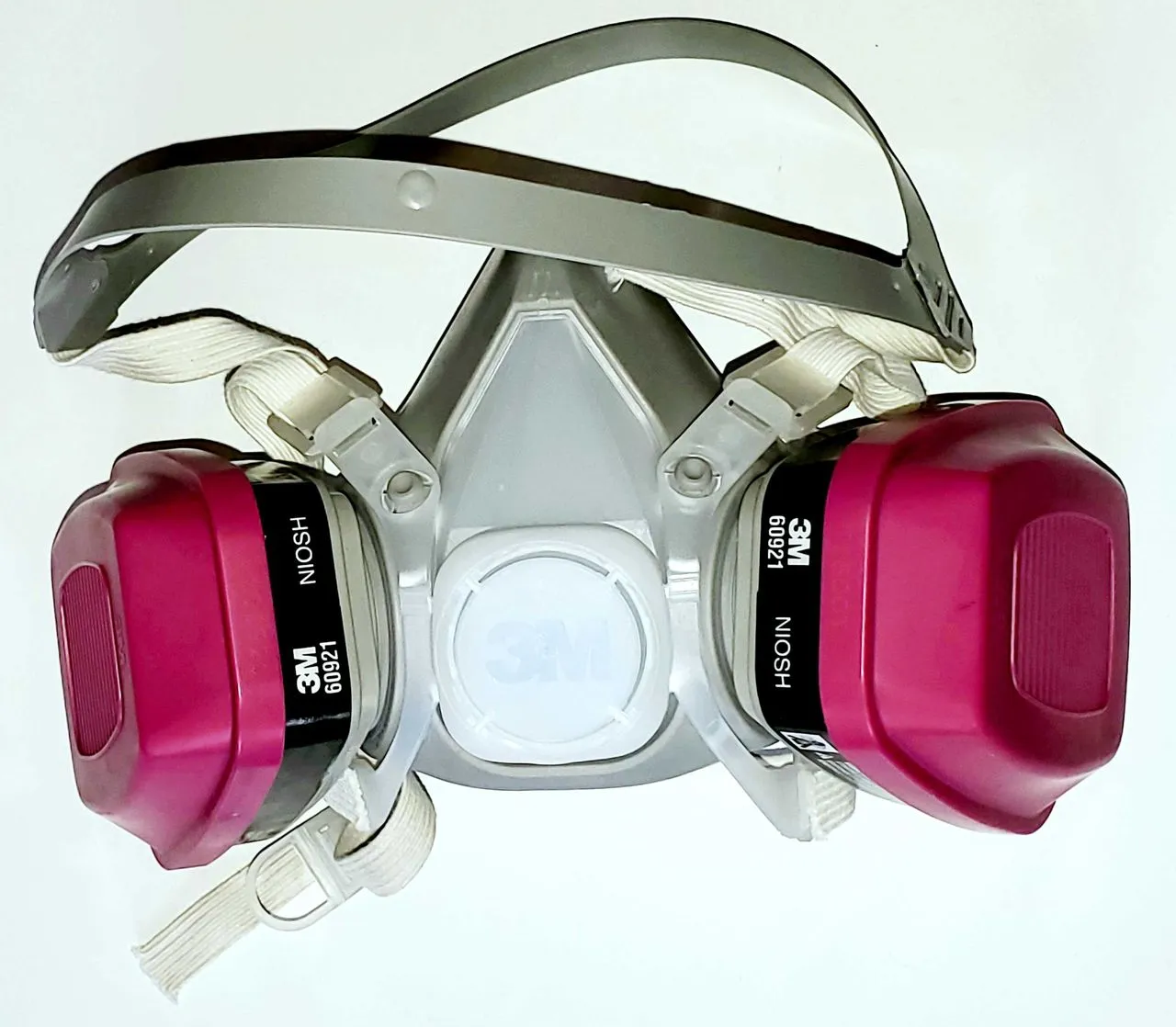
- Twin-cartridge combination filters (the pink-and-charcoal cartridges on a hardware-store half mask): typically 5 years, sometimes less for organic-vapor cartridges.
- Standard civilian 40mm NATO filters: 5 to 10 years is the common range across manufacturers.
- Military-grade CBRN filters: 15 to 20 years, thanks to more stable impregnants and serious factory sealing.
That last category is where the outlier lives. MIRA Safety’s NBC-77 SOF carries a 20-year sealed shelf life — per MIRA Safety’s spec sheet, it’s certified to EN 14387:2004 + A1:2008 with an A2B2E2K2HgSX P3 D R rating, the so-called “Reactor” class that adds mercury-vapor and radioactive-iodine coverage on top of the standard four gas families. Its P3 layer tested above 99.99% filtration, and it threads onto any standard 40mm NATO (EN 148-1) mask, including the CM-6M I covered in my MIRA CM-6M review. At around $75 to $90 per filter it costs three to four times what a five-year filter does — but do the per-year math. One 20-year filter versus four five-year replacement cycles isn’t close. That’s the difference between a recurring subscription and a line item you buy once and stop thinking about.
One honest caveat from the same spec sheet: the 20-year rating applies to a factory sealed filter only. Crack the seal and the clock changes completely — an opened filter is rated in hours of use, not years of storage. Buy sealed, store sealed, open when it matters.
Are expired or surplus gas mask filters safe?
This is where I’ll spend my opinion, because the surplus market is genuinely the worst corner of this hobby: I’d skip surplus filters entirely — here’s why.
The poster child is the Soviet GP-5, the cheap green mask that floods eBay and army surplus shops for $15 a kit. In 2017, the Finnish Safety and Chemicals Agency (Tukes) had twelve 1980s-era GP-5 filters tested by the Finnish Institute of Occupational Health. Asbestos was found in the particulate layers of all twelve. Not some. All. The finding forced Varusteleka, one of Europe’s biggest surplus retailers, to pull the filters and issue a recall asking customers to return what they’d bought. Asbestos in filter media wasn’t a Soviet quirk, either — filters from several countries used it in mid-century production, which is why the Helsinki University Museum now handles its own gas mask collection as hazardous material.
It doesn’t stop at asbestos. The US military’s old C2 canisters contained hexavalent chromium, a known carcinogen — the Army judged the levels acceptable for soldiers in a chemical emergency, which is a very different risk math than a family stashing one in a closet. And even a surplus filter with clean media is still a 40-year-old can of spent carbon with hardened gaskets.
Here’s the plain framing: the CDC’s respirator fact sheet stresses that protection only works when the right filter is matched to the hazard and the equipment actually seals. A surplus filter fails that test three ways before you ever open it — unknown media, unknown storage, dead date. The $60 you save isn’t savings. It’s the deductible on gear you’d be wearing during a house fire’s smoke plume or a chemical spill on the highway three blocks over.
Old filters make legitimate display pieces and training props. Practice your donning drills with one if you like. Just never put an expired or surplus filter in the “this protects my family” column of your plan.
How to store gas mask filters so they last
Storage is the one variable you fully control, and it’s blissfully low-effort:
- Leave the seal alone. The factory seal is the entire mechanism behind long shelf life. Don’t open a filter “just to look.”
- Keep it cool and stable. MIRA Safety’s storage spec for the NBC-77 SOF calls for -5°C to +30°C (23°F to 86°F) — in practice, an interior closet shelf. Not the attic, not the garage wall that bakes every August, not the trunk of your car.
- Keep it dry. Under 80% relative humidity. Humidity is the slow killer of carbon, and it degrades gaskets and encourages corrosion on metal-bodied filters too.
- Keep it dark. UV does rubber components no favors. A closed bin handles this automatically.
- Write the dates where you can see them. A strip of masking tape with the expiry date in fat marker beats squinting at a stamped rim in a stressful moment.
Mine sit in a labeled bin next to the water storage, and the expiration dates live in the same spreadsheet that tracks our canned goods — they come up for review during my Sunday shelf-life audit like everything else on those shelves. A filter is a pantry item with a very long horizon. Treat it like one and rotation takes care of itself.
Who should stock spare filters — and who can skip them
Stock spares if you already own a 40mm CBRN mask and it’s part of a real plan: wildfire smoke seasons, a house near rail lines or industrial corridors, tear gas drifting through a downtown you can’t avoid, or general two-week readiness. One sealed filter per mask is the floor; two is a plan. Buying long-dated filters like the NBC-77 SOF means your calendar only bothers you once every couple of decades — and if you’re still choosing the mask itself, start with my best gas masks for CBRN guide, since the mask decides which filters you can even use.
Skip spares — for now — if you don’t own a mask yet, or your realistic exposure is seasonal smoke, where a well-fitted P100 respirator from the hardware store covers you for a fraction of the cost. A $90 filter with no mask attached to it protects nobody. Build the plan in order: water, food, the mask that fits every face in the house, then the filters with the longest date you can buy.
And when you do buy, buy sealed, buy dated, buy certified. The expiration date is the rare piece of preparedness that asks nothing of you but reading it.
Cover photo: “P100 OVM respirator” by Jcallah, via Wikimedia Commons, licensed under CC BY-SA 4.0.Frequently asked questions
How long does a gas mask filter last once opened?
Once the factory seal is broken, the shelf-life clock stops mattering and the service window takes over. The activated carbon starts adsorbing ambient moisture immediately, and most manufacturers rate an opened CBRN filter for roughly eight hours of cumulative use. Treat an opened filter as spent gear, not storage gear.
Can you use an expired gas mask filter?
Not for real protection. The carbon's adsorption capacity and the housing gaskets both degrade past the printed date, and there's no home test that tells you how much capacity is left. Expired filters are fine for practicing donning and fit checks — just never count on one in actual smoke or gas.
Where is the expiration date on a gas mask filter?
Stamped or printed on the filter body itself, usually on the label or the metal rim — look for a manufacture date, an expiry date, or both, plus a lot number. If a filter has no legible date at all, that's your answer: treat it as expired and replace it.
Do any gas mask filters really last 20 years?
Yes, a few. MIRA Safety's NBC-77 SOF is the best-known example: EN 14387 certified and rated for 20 years of shelf life while factory sealed. Some military-grade filters carry similar ratings. The catch is the word sealed — the 20-year promise ends the moment you open the packaging.
Are Soviet surplus gas mask filters safe?
No. In 2017 the Finnish Safety and Chemicals Agency had twelve 1980s-era GP-5 filters lab tested, and asbestos turned up in the particulate layers of every single one, triggering a retailer recall. Add degraded seals and decades-old carbon, and surplus filters belong on a collector's shelf, not your face.
Does the gas mask itself expire too?
Eventually, but far more slowly. Mask bodies made of butyl rubber or silicone typically serve 10 to 20 years stored away from heat, sunlight, and ozone. Inspect the rubber for cracking or stickiness, check the valves, and confirm strap tension once a year — a mask ages like a tire, not like milk.